
What's Happening?
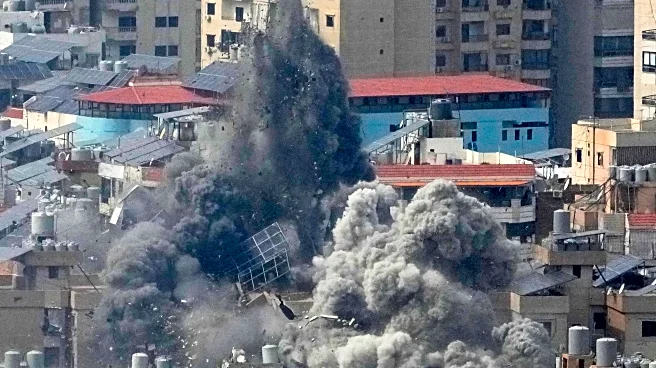
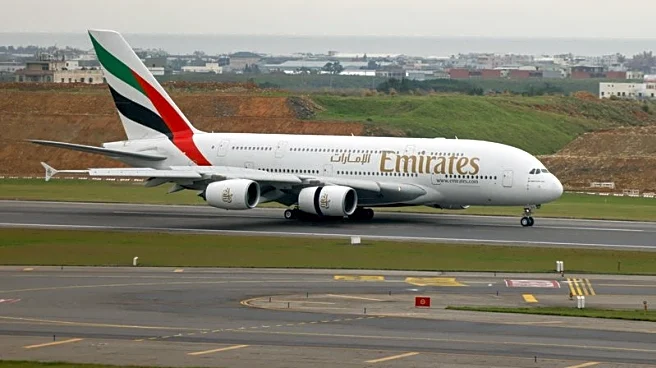
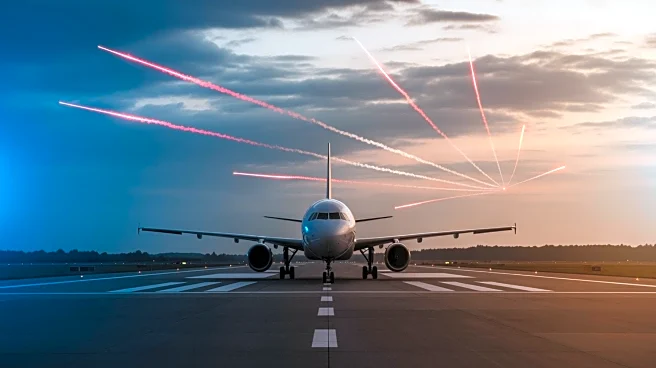
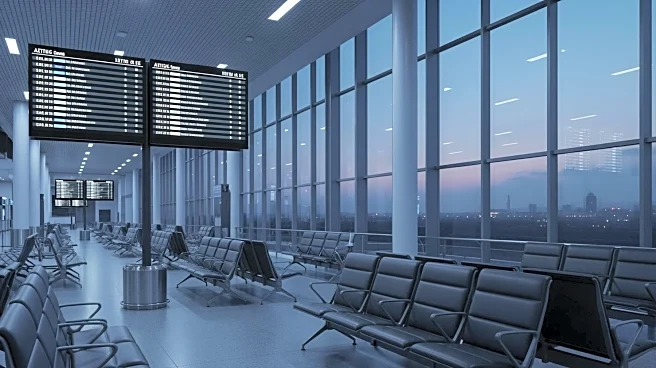
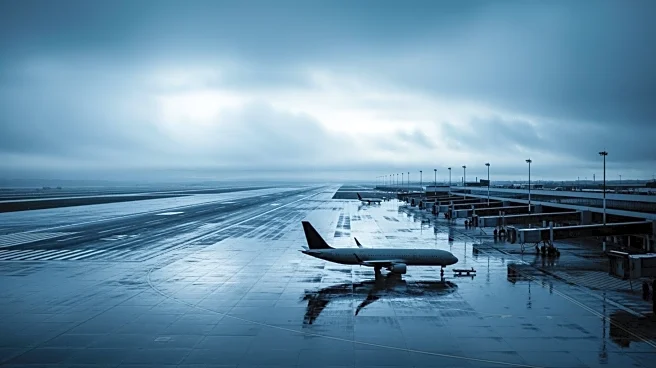
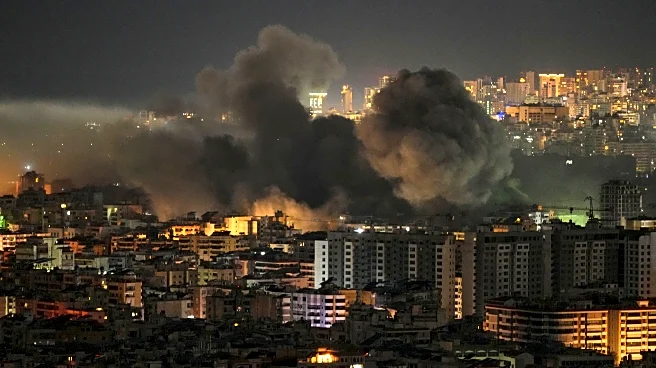
Emirati airlines, including Emirates and Etihad Airways, have resumed limited flight operations to key global cities from their hubs in the United Arab Emirates. This comes amid ongoing missile threats due to the U.S.-Israel conflict with Iran, which
has led to widespread flight cancellations across the Middle East. The situation has left thousands of passengers stranded, with some resorting to private jets or overland travel to reach less affected areas. The conflict has also caused a significant increase in fuel prices, impacting airlines' operational costs. Despite the resumption of some flights, airspace in the region remains largely closed, and airlines are struggling to manage the complex logistics of repatriation flights.
Why It's Important?
The disruption in air travel due to the Middle East conflict highlights the vulnerability of global aviation to geopolitical tensions. The closure of airspace and the threat of missile attacks have not only stranded passengers but also affected airlines' financial stability, as seen in the rising fuel costs. This situation underscores the interconnectedness of global travel networks and the potential for regional conflicts to have far-reaching impacts on international travel and commerce. Airlines operating in the region, as well as those with routes passing through, face significant operational challenges and financial pressures, which could lead to broader economic implications if the conflict persists.
What's Next?
As the conflict continues, airlines and governments are likely to focus on ensuring the safety of passengers and crew while attempting to maintain some level of service. The European Union Aviation Safety Agency (EASA) has extended its warning about high risks in the region, indicating that disruptions may continue. Airlines may need to adjust their routes and schedules, and further increases in fuel prices could lead to higher ticket prices for consumers. The situation may also prompt discussions on improving the resilience of global air travel networks to geopolitical disruptions.