






What's Happening?
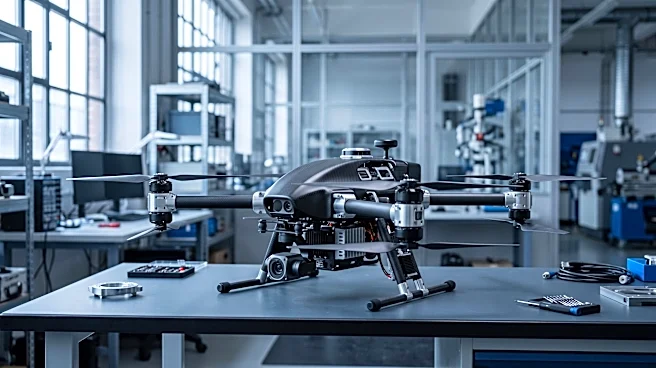
Taiwan has officially launched the Global Unmanned Aerial Vehicle Alliance for Resilience and Democracy (GUARD), an initiative aimed at fostering technology exchanges and establishing secure supply chains within the drone sector. The alliance will operate
under the framework of the Global UAV Academy and existing bilateral cooperation agreements. According to Jiang Zhenwei, head of Taiwan’s Ministry of Foreign Affairs task force on drone diplomacy, GUARD will concentrate on several key areas: supply-chain connections, international certification, professional education and training, international competitions, and the promotion of industry exhibitions. The announcement follows the Taiwan International Drone Forum held on October 30, which also marked the official opening of the Global UAV Academy. The forum attracted over 350 participants, including Vice President Hsiao Bi-khim and Foreign Minister Lin Chia-lung, and focused on critical components, supply-chain cooperation, and technological innovation. Memorandums of understanding were signed between the academy and partners like the National Chung-Shan Institute of Science and Technology and the Polish Chamber of Unmanned Systems, covering supply links, technology exchanges, and professional education.
Why It's Important?
The establishment of GUARD is significant for Taiwan as it seeks to expand its drone manufacturers' access to international markets and build a resilient UAV ecosystem among democratic nations. This initiative leverages Taiwan's strengths in semiconductor manufacturing, information and communication technologies, and precision engineering, which were highlighted by a Taiwanese delegation at the Berlin Security Conference as crucial contributions to European efforts in securing UAV supply chains. For the U.S. and its allies, this alliance could bolster efforts to diversify critical technology supply chains away from potential adversaries, enhancing national security and technological independence. By promoting international certification and professional training, GUARD aims to standardize quality and operational protocols, which could facilitate greater interoperability and trust among participating nations. The focus on secure supply chains also addresses growing concerns about the integrity and reliability of components in advanced defense technologies, making it a strategic move in the broader geopolitical landscape.
What's Next?
Moving forward, GUARD is expected to actively pursue its stated objectives, including facilitating international certification processes for Taiwanese drone manufacturers and organizing professional training programs to enhance expertise in the UAV sector. The alliance will likely seek to expand its network of international partners, building on existing collaborations with entities like the Polish Chamber of Unmanned Systems. Future activities may include hosting international competitions and industry exhibitions to showcase Taiwanese drone technology and foster further collaboration. The emphasis on supply-chain connections suggests that GUARD will work to integrate Taiwanese manufacturers more deeply into global UAV production networks, potentially leading to new partnerships and investment opportunities. The success of GUARD will depend on its ability to effectively coordinate efforts among industry, academia, and government stakeholders, both domestically and internationally, to create a robust and secure global drone ecosystem.
Beyond the Headlines
The launch of GUARD extends beyond immediate economic and technological benefits, touching upon broader geopolitical implications. By focusing on 'Resilience and Democracy,' Taiwan is positioning itself as a key player in a coalition of democratic states aiming to secure critical technologies and reduce reliance on authoritarian regimes. This initiative can be seen as part of a larger trend where democratic nations are actively working to de-risk supply chains and build technological alliances based on shared values. The emphasis on professional education and training also highlights a long-term strategy to cultivate a skilled workforce capable of driving innovation and maintaining technological leadership in the UAV domain. Furthermore, by promoting international certification, GUARD could set new standards for drone technology, influencing global norms and practices in an increasingly critical sector. This strategic move by Taiwan could encourage other democratic nations to strengthen their own domestic drone industries and foster greater collaboration in defense technology development.