
What's Happening?
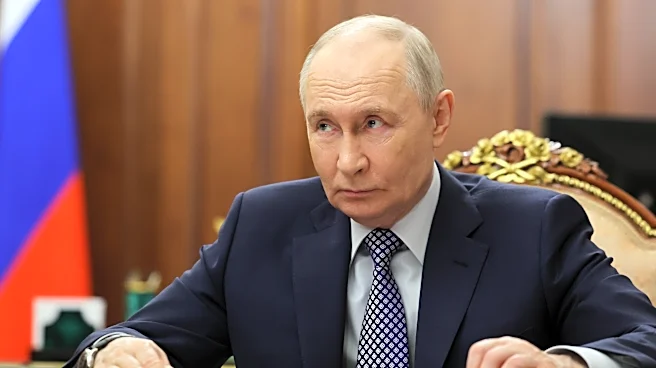
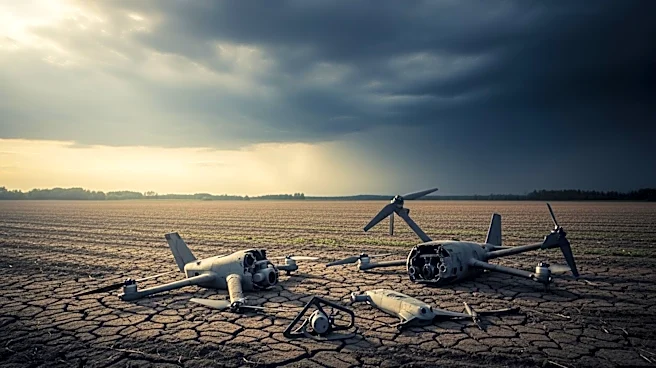
Despite a ceasefire declared by Russian President Vladimir Putin over the Orthodox Easter weekend, Russian drone attacks persisted in Ukraine. The ceasefire, intended to last 32 hours from Saturday afternoon
to Sunday, was not fully observed, according to Ukrainian military sources. Serhii Kolesnychenko, a communications officer for the 148th Separate Artillery Brigade, reported ongoing drone strikes in the Donetsk, Dnipropetrovsk, and Zaporizhzhia regions. Ukrainian forces responded to these violations with equivalent measures. The Ukrainian military command noted 469 violations of the truce. Meanwhile, Russian officials accused Ukraine of similar breaches, citing drone attacks in Russia's Kursk and Belgorod regions. The ceasefire was described by Kremlin spokesperson Dmitry Peskov as a humanitarian gesture, yet both sides have a history of accusing each other of violating such agreements.
Why It's Important?
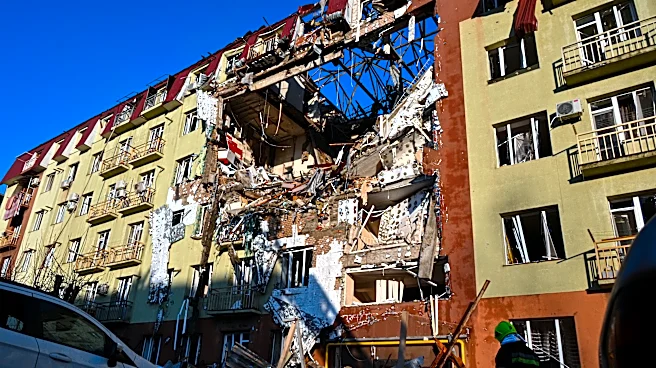
The continuation of hostilities despite the ceasefire highlights the ongoing volatility and complexity of the conflict between Russia and Ukraine. The failure to adhere to the ceasefire underscores the challenges in achieving a lasting peace agreement. This situation affects not only the immediate safety of civilians in the conflict zones but also has broader implications for international relations and security in the region. The persistent conflict may influence global political dynamics, particularly in terms of alliances and support from Western nations. The humanitarian impact is significant, with civilian casualties and infrastructure damage continuing to mount, exacerbating the humanitarian crisis in Ukraine.
What's Next?
The ongoing violations of the ceasefire suggest that further diplomatic efforts will be necessary to achieve a sustainable peace. Both Russia and Ukraine may face increased pressure from international communities to adhere to agreements and work towards a comprehensive settlement. The continuation of military engagements could lead to further sanctions or diplomatic actions from Western countries. Additionally, the humanitarian needs in Ukraine are likely to increase, necessitating more international aid and support. The situation remains fluid, with potential for escalation if ceasefire violations continue.