



What's Happening?
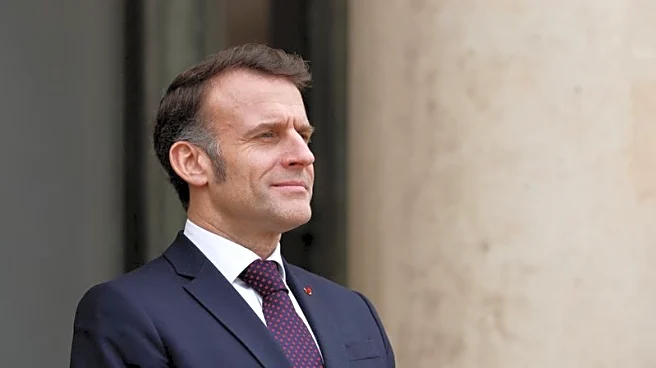
Greece's Prime Minister Kyriakos Mitsotakis has expressed concerns over President Trump's 'Board of Peace' initiative, stating that it exceeds the United Nations Security Council's mandate. The initiative, launched in Davos, aims to address global conflicts
but has been criticized for creating a parallel structure to the UN. Mitsotakis highlighted that most European countries, including Norway, Sweden, and France, have opted out of the initiative, with only Hungary and Bulgaria participating. The initiative stems from a 20-point Gaza ceasefire plan but has expanded significantly, raising concerns about Trump's disproportionate influence and the inclusion of Russia. Mitsotakis also commented on the recent tensions over Greenland, noting relief after Trump retracted his threat to seize the territory, opting instead for a NATO-brokered security deal.
Why It's Important?
The 'Board of Peace' initiative represents a significant shift in international diplomacy, potentially altering the balance of power within global conflict resolution frameworks. By bypassing traditional UN structures, the initiative could undermine established international norms and protocols. European countries' reluctance to join reflects broader concerns about U.S. unilateralism under President Trump, which could strain transatlantic relations. The initiative's limited participation suggests skepticism about its legitimacy and effectiveness, highlighting the challenges of garnering international support for U.S.-led initiatives that diverge from multilateral approaches.
What's Next?
The future of the 'Board of Peace' will likely depend on its ability to demonstrate tangible results in conflict resolution and gain broader international support. European countries may continue to advocate for solutions within existing UN frameworks, potentially leading to diplomatic tensions with the U.S. The initiative's progress will be closely monitored by global leaders, who may push for modifications to align it more closely with international norms. Additionally, the U.S. may face pressure to address concerns about the initiative's scope and governance to secure wider participation.