
What's Happening?
The United States Treasury and Department of State have escalated their 'maximum pressure' campaign against Iran by imposing additional sanctions on Iranian oil and tankers. This move is part of a broader
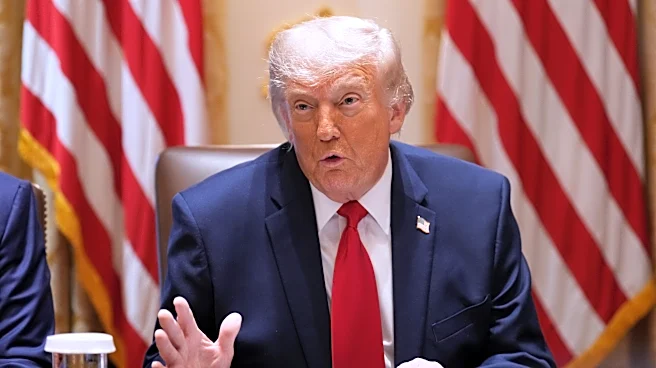
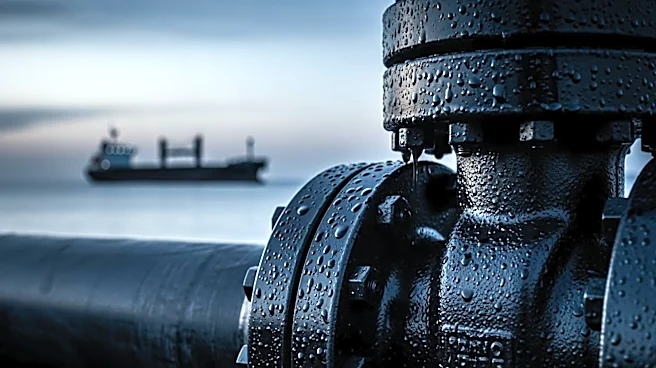
strategy to compel Iran to negotiate favorable terms in ongoing ceasefire discussions. President Trump is set to meet with his advisers to make a final determination on the agreement, although Iran has indicated that terms have not yet been finalized. The U.S. has also sanctioned three traders involved in the Iranian petrochemical industry, targeting entities in Qatar, Singapore, and India. The sanctions aim to reduce the revenue flowing to Iran's military apparatus, including the IRGC. The U.S. Navy continues to enforce a blockade, preventing commerce from entering or leaving Iranian ports, with an estimated 60 million barrels of Iranian crude oil currently trapped.
Why It's Important?
The sanctions are a critical component of the U.S. strategy to exert economic pressure on Iran, aiming to curb its military capabilities and influence in the region. By targeting Iran's oil revenue, the U.S. seeks to weaken the financial foundation of the IRGC and other military entities. This move could have significant implications for global oil markets, potentially affecting oil prices and supply chains. The sanctions also underscore the geopolitical tensions in the region, particularly concerning the strategic Strait of Hormuz, a vital passage for global oil shipments. The outcome of these negotiations and sanctions could influence U.S. foreign policy and its relations with allies and adversaries in the Middle East.
What's Next?
President Trump's upcoming decision on the ceasefire agreement will be pivotal. If the U.S. and Iran reach an agreement, it could lead to a temporary easing of tensions and a potential opening of diplomatic channels. However, if negotiations stall, the U.S. may continue to intensify its sanctions and military presence in the region. The international community, including U.S. allies, will be closely monitoring these developments, as they could impact global economic stability and security dynamics in the Middle East.