







What's Happening?
The crew of NASA's Artemis II mission has successfully returned to Earth, marking a significant milestone in lunar exploration. The four astronauts, including Commander Reid Wiseman, pilot Victor Glover, Christina Koch, and Canada's Jeremy Hansen, completed
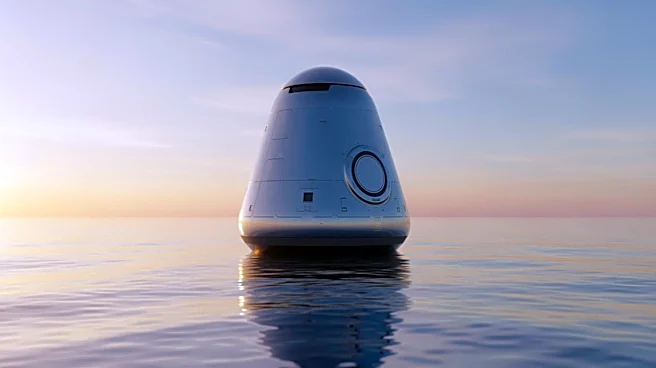
a 10-day mission that included a record-breaking lunar flyby. Their Orion capsule, named Integrity, splashed down in the Pacific Ocean after reentering Earth's atmosphere at speeds 33 times the speed of sound. This mission was notable for being the first human journey toward the moon in over 50 years and set a new record for the farthest distance traveled from Earth. The mission also marked the first use of NASA's Space Launch System rocket and the Orion spacecraft.
Why It's Important?
The successful completion of the Artemis II mission represents a pivotal step in NASA's efforts to return humans to the moon and eventually establish a sustainable presence there. This mission not only tested new technologies and systems critical for future lunar exploration but also demonstrated international collaboration, with Canadian astronaut Jeremy Hansen participating. The mission's success could bolster public and governmental support for NASA's Artemis program, which aims to land the first woman and the next man on the moon by the mid-2020s. The advancements in space technology and exploration capabilities could have significant implications for scientific research, international partnerships, and the commercial space industry.
What's Next?
Following the successful return of the Artemis II crew, NASA will analyze the data collected during the mission to refine and improve the systems and technologies used. The next major milestone in the Artemis program is the Artemis III mission, which aims to land astronauts on the lunar surface. This mission will focus on exploring the lunar South Pole, a region believed to contain water ice, which could be crucial for sustaining future lunar bases. NASA will continue to work with international and commercial partners to develop the infrastructure and capabilities needed for long-term lunar exploration.