





What's Happening?
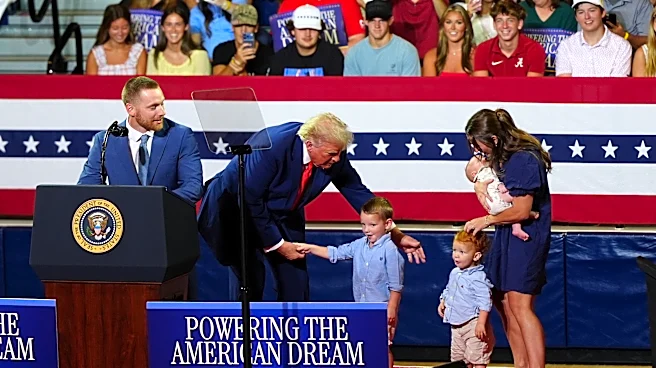
President Trump, during a rally in Marietta, Georgia, dismissed the term 'affordability' as a concept invented by Democrats. He attributed the current economic challenges, including high inflation and oil prices, to the policies of his predecessor, Joe
Biden, and the 'radical left Democrats.' Trump claimed that oil prices would decrease significantly, despite recent spikes due to geopolitical tensions in the Middle East. His comments come as oil prices surged past $100 a barrel, contradicting his assurances of a price drop. Trump also highlighted falling egg prices as a success of his administration, although experts attribute this to recovery from avian flu outbreaks rather than policy changes.
Why It's Important?
Trump's remarks on affordability and oil prices reflect ongoing political debates over economic management and inflation. His dismissal of affordability as a political term underscores partisan divides on economic issues. The rise in oil prices, despite Trump's predictions, highlights the complexities of global energy markets and their impact on domestic economies. This situation affects consumers facing higher costs for fuel and goods, challenging Trump's narrative of economic success. The political implications are significant, as economic performance is a critical factor in electoral politics, influencing public perception and voter behavior.
What's Next?
The ongoing volatility in oil prices may prompt further political and economic responses. Stakeholders, including policymakers and industry leaders, will likely monitor geopolitical developments and market trends closely. Trump's economic narrative may face scrutiny as voters assess the impact of inflation and energy costs on their daily lives. Future political discourse may focus on strategies to address affordability and economic stability, with potential implications for upcoming elections. The administration's handling of these issues could influence public opinion and shape the political landscape.