






What's Happening?
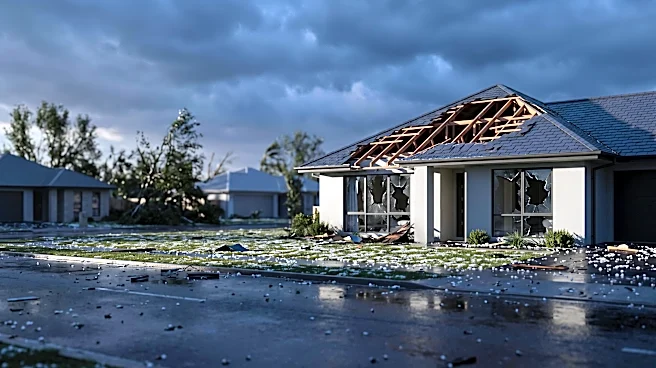
President Emmerson Mnangagwa has declared a state of disaster in Masvingo Province after a severe hailstorm caused widespread destruction. The storm, which struck on Monday evening, brought strong winds and hail, damaging thousands of homes and critical
infrastructure. Minister of Local Government and Public Works, Daniel Garwe, announced the declaration on Tuesday under Section 27(1) of the Civil Protection Act. Preliminary assessments indicate that approximately 8,500 households had their roofs completely blown off, and 90% of the 17,000 assessed households suffered shattered windowpanes, leaving families exposed as the rainy season begins. The storm also severely impacted public utilities, education and health institutions, and commercial establishments. Major institutions affected include Great Zimbabwe University's Mucheke Campus, Masvingo Polytechnic, and Runyararo Clinic Maternity Ward. Business operations in Masvingo City were disrupted, with retail and hospitality outlets experiencing roof damage and asset loss. Additionally, electricity infrastructure was extensively damaged, leading to power outages that have affected water pumping systems, municipal drainage, and sewer networks, raising public health concerns.
Why It's Important?
The declaration of a state of disaster is crucial for coordinating emergency relief and recovery efforts in Masvingo Province. The extensive damage to homes, public utilities, and infrastructure poses significant challenges to the affected communities. The loss of roofs and shattered windows leaves thousands of families vulnerable to the elements, particularly with the onset of the rainy season, which could exacerbate health risks and living conditions. The disruption of essential services like water pumping and sewage systems due to power outages creates an immediate public health crisis, increasing the potential for waterborne diseases and sanitation issues. The damage to educational and health institutions will hinder access to vital services, impacting the well-being and future prospects of the population. Furthermore, the disruption to businesses will have economic repercussions, affecting livelihoods and the local economy. The government's commitment to mobilizing resources and appealing for assistance from the private sector and development partners highlights the scale of the disaster and the need for a concerted effort to rebuild and restore normalcy.
What's Next?
Following the declaration, authorities will continue with damage assessments to fully ascertain the extent of the destruction. Emergency relief and recovery efforts are being coordinated, with the government mobilizing all available resources to assist affected communities. Minister Garwe has made an urgent appeal to the private sector and development partners to join the government in these relief efforts. Interventions are being rolled out to provide immediate assistance to those impacted. The focus will be on providing shelter, restoring essential services like power and water, and addressing public health concerns arising from damaged infrastructure. The long-term recovery will involve rebuilding homes, public buildings, and infrastructure, which will require substantial resources and sustained effort. The government has reiterated its commitment to ensuring that all affected individuals and areas receive support during the rebuilding process.
Beyond the Headlines
The severe hailstorm in Masvingo Province underscores the increasing vulnerability of communities to extreme weather events, which may be linked to broader climate patterns. Beyond the immediate humanitarian crisis, the incident highlights the need for resilient infrastructure and robust disaster preparedness strategies. The extensive damage to homes and public services reveals potential weaknesses in construction standards and urban planning, particularly in areas prone to such natural phenomena. The disruption of power and water systems, leading to public health risks, points to the interconnectedness of critical infrastructure and the cascading effects of their failure. This event could serve as a catalyst for re-evaluating and strengthening national disaster response mechanisms, as well as encouraging greater investment in climate-resilient development. The appeal to the private sector and development partners also emphasizes the importance of multi-stakeholder collaboration in addressing large-scale disasters and building more sustainable communities.