

What's Happening?
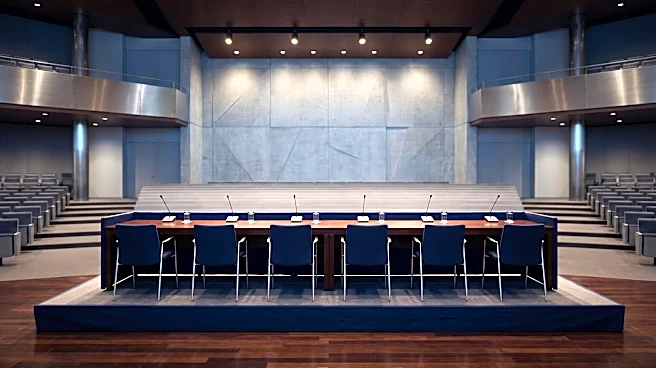
David E. Nahmias, a partner at Jones Day, is slated to moderate a plenary session titled "White Collar Practice One Year Into President Trump's 2.0 Administration" at the Southeastern White Collar Crime Institute 2026. This event, hosted by the American
Bar Association's Criminal Justice Section, will take place from September 9–11, 2026, in Braselton, Georgia. The panel will feature prominent legal professionals, including Stephanie K. McGuire of Hilder & Associates, Paul B. Murphy of King & Spalding, Adria L. Perez of Reed Smith, and Ripley Rand of Womble Bond Dickinson. The discussion will focus on recent developments in federal white-collar enforcement during the first year of the current administration, addressing the increasingly complex enforcement landscape faced by companies and individuals.
Why It's Important?
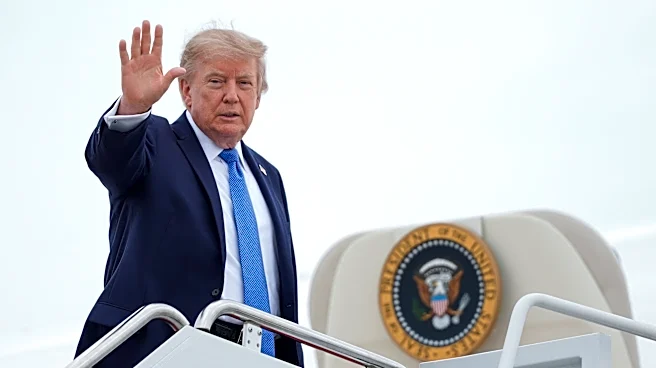
The panel discussion is highly relevant for legal practitioners, corporations, and individuals navigating the intricate world of white-collar crime and government investigations. The focus on the first year of President Trump's 2.0 Administration suggests an analysis of potential shifts in enforcement priorities, regulatory approaches, and prosecutorial strategies under a new presidential term. Such insights are crucial for businesses and individuals to adapt their compliance programs and legal defense strategies effectively. The participation of a Jones Day partner as moderator, alongside other distinguished panelists, underscores the significance of this topic within the legal community and highlights the ongoing need for expert guidance in an area that can have severe consequences for those involved. The institute itself serves as a vital platform for sharing knowledge and fostering professional development in this specialized field.
What's Next?
The discussions at the Southeastern White Collar Crime Institute, particularly the panel moderated by David E. Nahmias, are expected to provide valuable insights into the evolving landscape of federal white-collar enforcement. These insights will likely inform legal strategies for companies and individuals facing potential investigations or charges. Attendees, including attorneys, prosecutors, judges, and compliance professionals, will gain a deeper understanding of current trends in areas such as fraud, public corruption, FCPA enforcement, sanctions, and the False Claims Act. The information shared could lead to adjustments in corporate compliance frameworks and legal defense tactics, aiming to mitigate risks associated with the administration's enforcement priorities. The institute's findings may also contribute to broader discussions on legal policy and regulatory reform in the white-collar crime domain.
Beyond the Headlines
The continuous examination of white-collar enforcement trends, especially under different presidential administrations, reflects the dynamic interplay between politics, law, and corporate governance. The legal community's proactive engagement in understanding these shifts is critical for maintaining the integrity of the financial system and ensuring fair application of justice. The panel's focus on President Trump's 2.0 Administration implies an anticipation of specific policy directions or enforcement philosophies that could impact various industries. This ongoing dialogue helps to demystify complex legal processes and provides a forum for diverse perspectives on how best to balance robust enforcement with due process and economic stability. The role of prominent law firms like Jones Day in these discussions highlights their influence in shaping legal discourse and practice in high-stakes areas.