





What's Happening?
Lieutenant General Joseph Jarrard, Deputy Commander of U.S. Northern Command and Vice Commander of the American contingent at North American Aerospace Defense Command (NORAD), has issued a warning that U.S. military bases are currently 'ill-equipped'
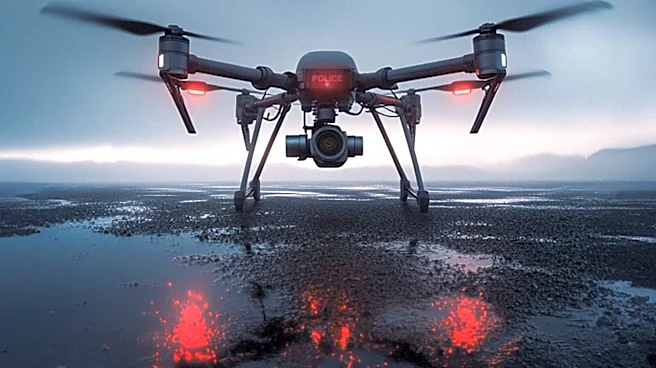
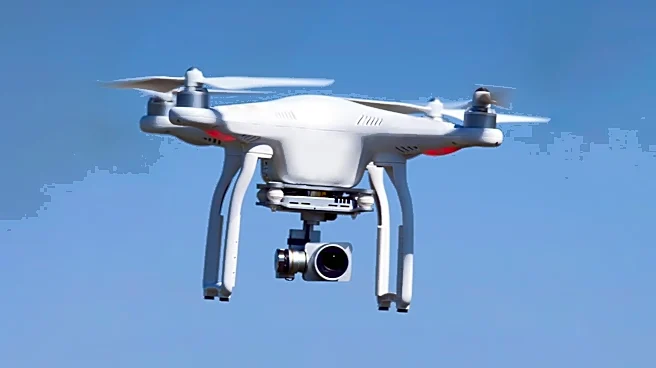
to defend against swarms of small attack drones. This vulnerability stems from a lack of adequate sensors to detect and track incoming drone swarms, as well as insufficient weaponry to neutralize them. Jarrard highlighted that some bases completely lack the necessary detection systems and effectors. NORAD is integrating counter-drone tactics into Operation Noble Eagle, the joint U.S.-Canada homeland air-defense mission, and is working to connect with local law enforcement and other agencies to expand detection capabilities beyond military installations. This assessment comes amidst the Pentagon's efforts to secure billions for new counter-drone technologies, acknowledging the significant gap between current protective measures and the evolving threat landscape. The issue has gained renewed attention following recent discussions about unidentified anomalous phenomena (UAPs) near military sites, though Jarrard's concerns specifically address the immediate and localized threat posed by low-cost drones.
Why It's Important?
The inability of U.S. military bases to effectively counter drone swarms poses a critical national security risk. The proliferation of cheap, one-way attack drones has fundamentally altered modern warfare, as demonstrated in conflicts in Ukraine and the Middle East. Adversaries can now threaten military equipment, infrastructure, and personnel with minimal expenditure, bypassing traditional air defense systems designed for more sophisticated threats. This vulnerability could lead to significant damage to critical military assets, compromise operational readiness, and potentially result in casualties on U.S. soil or at overseas bases. The warning underscores a strategic gap that could be exploited by state and non-state actors, impacting the safety of military personnel and the integrity of defense installations. Addressing this shortfall is crucial for maintaining military superiority and protecting national interests against evolving asymmetric threats. The economic implications are also substantial, as the Pentagon is seeking a record $21 billion for drone and counter-drone capabilities, indicating a significant investment required to mitigate this vulnerability.
What's Next?
The U.S. military is actively pursuing multiple solutions to address the drone swarm threat. These include the development and deployment of radio-frequency systems capable of jamming drone communications or interfering with satellite navigation, as well as high-powered microwave weapons designed to disrupt the electronics of multiple drones simultaneously. Additionally, the Army is moving closer to fielding high-energy lasers, with a contract award for the Enduring High Energy Laser (E-HEL) program anticipated. This technology could provide a cost-effective way to engage drones without relying solely on expensive missile interceptors, though lasers have limitations such as line-of-sight requirements. The integration of these new technologies with existing sensor networks and command-and-control systems is a critical next step. Furthermore, continued collaboration with local law enforcement and other agencies to enhance detection capabilities beyond military installations will be essential. The ongoing efforts reflect a concerted push to rapidly close the existing gap in counter-drone defenses and adapt to the changing nature of aerial threats.
Beyond the Headlines
The vulnerability to drone swarms highlights a broader shift in military strategy and defense priorities. The rise of inexpensive, easily deployable drone technology democratizes aerial warfare, making it accessible to a wider range of actors beyond traditional state militaries. This necessitates a re-evaluation of conventional defense paradigms, which have historically focused on larger, more complex threats. The ethical and legal implications of autonomous or semi-autonomous drone swarms also warrant consideration, particularly regarding targeting decisions and accountability. Furthermore, the need for enhanced interoperability between military and civilian detection systems points to a growing requirement for integrated national security approaches that transcend traditional boundaries. The long-term shift could involve a greater emphasis on distributed defense systems, artificial intelligence for threat detection and neutralization, and a continuous adaptation of defense strategies to counter rapidly evolving technological advancements in unmanned aerial systems. This challenge underscores the ongoing arms race in military technology and the imperative for constant innovation to maintain a defensive edge.