






What's Happening?
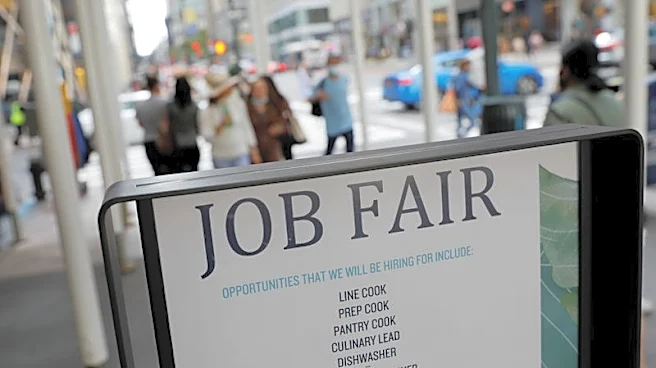
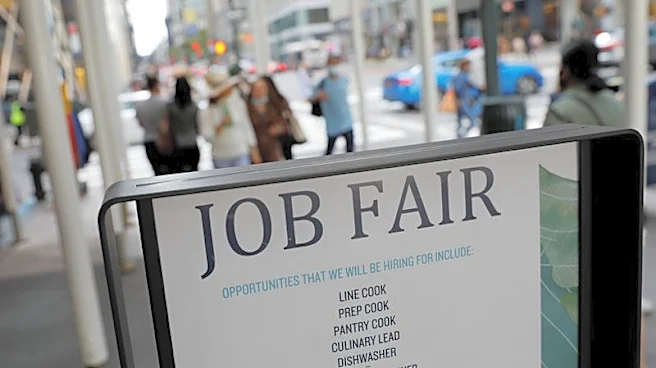
The U.S. Bureau of Labor Statistics reported a significant increase in non-farm jobs for May, with 172,000 new positions added. This growth was primarily driven by the leisure and hospitality sectors, local government, and healthcare. The unemployment
rate remained steady at 4.3%, aligning with forecasts. Average hourly earnings saw a modest increase, contributing to a year-over-year rise of 3.4%. Despite these gains, the financial activities sector experienced a decline, losing 22,000 jobs. The report also noted revisions to previous months' data, with April's job numbers adjusted upward.
Why It's Important?
The robust job growth in May indicates a resilient U.S. economy, particularly in sectors like leisure and hospitality, which are recovering from pandemic-related downturns. Steady unemployment rates and rising wages suggest a stable labor market, which could influence consumer spending and economic growth. However, the decline in financial activities highlights potential vulnerabilities in specific sectors. These employment trends are crucial for policymakers and economists as they assess the health of the economy and consider future monetary policies.
What's Next?
With the labor market showing strength, the Federal Reserve may face pressure to adjust interest rates to manage inflation and economic growth. The mixed performance across sectors suggests that targeted economic policies might be necessary to address specific challenges. Future employment reports will be closely watched for signs of sustained growth or emerging weaknesses, influencing both market expectations and government policy decisions.