
What's Happening?
Four residents of Rio Rancho, New Mexico, have urged the city's governing body to discontinue its contract with Flock Safety, the vendor for the city's automated license plate reader (ALPR) network. The
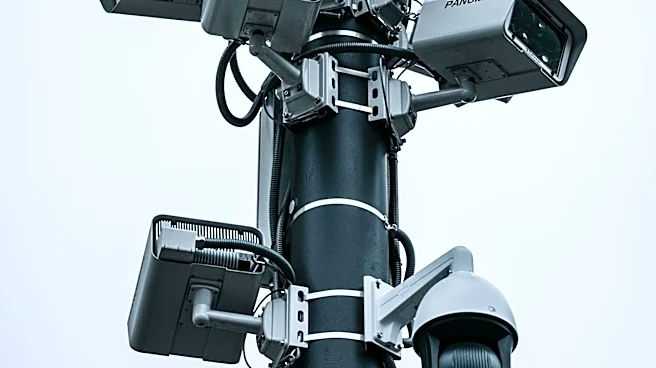
network, which has expanded to 19 cameras citywide, records every passing license plate. Residents argue that this constitutes warrantless mass surveillance and an infringement on privacy, with Joaquin Montoya of DeFlock New Mexico stating it creates a 'database of the innocent.' Matt Griffin called for more transparency regarding data access and storage, while Chris Adams expressed concern about building surveillance infrastructure that future governments could inherit. Another resident cited a Fourth Amendment violation. In response, Mayor Paul Wymer acknowledged the criticism but also noted receiving feedback from other residents who are content with the surveillance systems. Rio Rancho Police reported to councilors on August 18 that the cameras contributed to the recovery of 74 stolen vehicles, 50 stolen license plates, and 85 arrests between 2022 and 2023. The program began in 2018 with cameras on patrol vehicles, transitioning to fixed, solar-powered units in 2020. Flock Safety was chosen partly because it does not retain or sell collected license plate data, which is deleted after 30 days unless downloaded for an active case.
Why It's Important?
The debate in Rio Rancho highlights a growing national tension between public safety initiatives and individual privacy rights, particularly concerning advanced surveillance technologies like ALPRs. The residents' concerns about 'warrantless mass surveillance' and potential Fourth Amendment violations reflect a broader societal discussion about the appropriate limits of government monitoring in a democratic society. While law enforcement agencies often cite the effectiveness of these systems in crime reduction and recovery of stolen property, privacy advocates argue that the collection of data on all citizens, regardless of suspicion, erodes fundamental liberties. The city's choice of Flock Safety, which purports not to retain or sell data beyond 30 days, attempts to address some privacy concerns, but the core issue of pervasive tracking remains. This situation could influence how other U.S. municipalities consider adopting or expanding similar surveillance technologies, potentially leading to more stringent regulations or public pushback if privacy concerns are not adequately addressed. The outcome in Rio Rancho could set a precedent for how local governments balance security needs with civil liberties in the digital age.
What's Next?
The Rio Rancho governing body is expected to consider the residents' request to review or terminate the contract with Flock Safety. This could involve further public hearings, detailed presentations from the police department on the system's efficacy and safeguards, and discussions about the legal and ethical implications of ALPR technology. Mayor Paul Wymer has directed residents to the city's ALPR webpage for more information, indicating a desire for public education on the program. The city council may also explore alternative solutions or modifications to the current system to address privacy concerns while maintaining public safety objectives. A new state law, Senate Bill 40, which took effect on July 1, restricts how ALPR data can be shared, barring its use for immigration enforcement and making it confidential from public records requests. This legislative development will likely influence future discussions and decisions regarding the ALPR network's operation and oversight. Police have stated they audit the system quarterly and would terminate employees for misuse of law enforcement databases, suggesting internal accountability measures are already in place.
Beyond the Headlines
The controversy surrounding Rio Rancho's ALPR network extends beyond immediate privacy concerns to touch upon the long-term implications of ubiquitous surveillance infrastructure. The argument that 'future governments inherit those capabilities' raises critical questions about the enduring nature of technological systems and their potential for mission creep or misuse by subsequent administrations. This highlights the need for robust oversight mechanisms, clear legal frameworks, and public accountability to prevent the erosion of civil liberties over time. The debate also underscores the evolving definition of privacy in an increasingly data-driven world, where technologies can collect vast amounts of information about individuals' movements and habits. The tension between collective security and individual freedom is a foundational aspect of American democracy, and how communities like Rio Rancho navigate this challenge will contribute to the broader national discourse on technology, governance, and civil rights. The case also implicitly questions the effectiveness of current legal protections, such as the Fourth Amendment, in an era of advanced digital surveillance.