




What's Happening?
The government of Andhra Pradesh has inaugurated six new urban forests under the Nagar Van Yojana, increasing the state's total to 25 urban forests from 19. These new projects span 305 hectares and were developed at a cost of Rs 13 crore. Deputy Chief
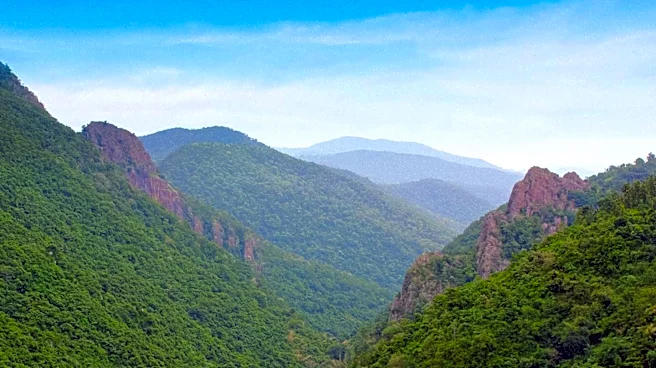
Minister K. Pawan Kalyan stated that the initiative aims to connect people with nature while simultaneously generating livelihood opportunities for tribal youth through eco-tourism. The urban forests are designed to offer recreational facilities such as cycling and walking tracks, children’s play areas, and gym equipment, promoting health and nature awareness. The expansion extends tourism from existing sites like the Nallamala forests and Maredumilli to coastal areas such as Bapatla and Chirala, and spiritual destinations like Kotappakonda. Urban forests in Vinukonda, Devarampadu, and Macherla are also slated for development as tourism destinations.
Why It's Important?
This expansion of eco-tourism infrastructure in Andhra Pradesh is significant for several reasons. Economically, it is expected to create jobs, particularly for tribal youth, by showcasing forest landscapes and tribal culture through initiatives like the Velugodu Jungle Safari and Maredumilli trekking and aroma canopy walks. This directly addresses local livelihoods and provides economic upliftment in rural and tribal communities. Environmentally, the development of urban forests contributes to conservation efforts and promotes nature awareness among the public. Socially, these projects offer new recreational spaces for citizens, fostering a connection with nature and potentially improving public health. The integration of coastal and spiritual tourism with eco-tourism also diversifies the state's tourism offerings, potentially attracting a broader range of visitors and boosting the overall tourism sector.
What's Next?
Following the inauguration, the focus will likely shift to the operationalization and promotion of these new eco-tourism sites. The government will need to ensure effective management and maintenance of the urban forests and associated facilities. Further development of tourism infrastructure in areas like Vinukonda, Devarampadu, and Macherla is anticipated. There will also be an emphasis on training and integrating tribal youth into the eco-tourism workforce to maximize the local economic benefits. Public cooperation is being sought to ensure the long-term sustainability of these natural assets. The Deputy Chief Minister also released publications such as 'Wild Ornamental Plants of the Nallamala Forest of Andhra Pradesh' and a 'Tree Translocation Manual,' indicating ongoing efforts in forest management and conservation.
Beyond the Headlines
The initiative reflects a broader global trend towards sustainable tourism and the recognition of natural assets as drivers of economic development. By integrating eco-tourism with tribal livelihoods, the project addresses both environmental conservation and social equity. It highlights the potential for nature-based solutions to contribute to economic growth while preserving cultural heritage and natural resources. The emphasis on 'connecting people with nature' also points to a growing awareness of the importance of green spaces for urban populations' well-being. This model could serve as a blueprint for other regions looking to leverage their natural beauty for sustainable development, provided that the implementation genuinely adheres to ecotourism principles of low impact, education, conservation funding, and local benefits, as defined by organizations like The International Ecotourism Society.