


What's Happening?
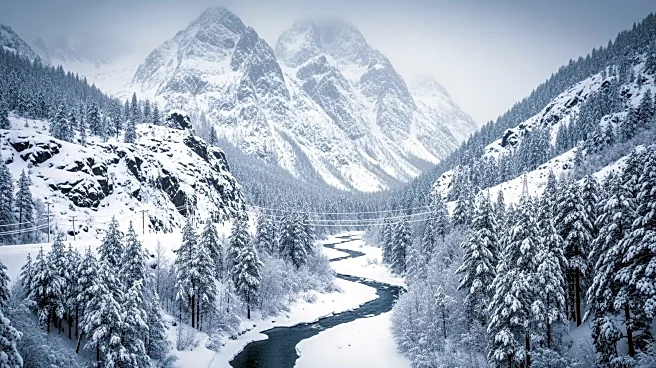
NASA has reported significant snowfall in Russia's Kamchatka Peninsula, with more than 2 meters of snow falling in the first two weeks of January 2026, following 3.7 meters in December. This period marks one of the snowiest since the 1970s, according
to Kamchatka’s Hydrometeorology Center. The heavy snowfall has severely impacted the regional capital, Petropavlovsk-Kamchatsky, causing large snowdrifts that have buried cars and blocked access to buildings and infrastructure. The snow has been attributed to a weakened and distorted polar vortex, which has led to increased cold air intrusions into mid-latitudes, affecting North America, Europe, and Asia. The MODIS instrument on NASA’s Aqua satellite captured images of the snow-blanketed peninsula, highlighting the region's rugged terrain and volcanic peaks.
Why It's Important?
The extreme weather conditions in Kamchatka highlight the broader impacts of atmospheric changes on global weather patterns. The weakened polar vortex and resulting cold air intrusions have not only affected Russia but have also contributed to cold snaps across North America and Europe. This situation underscores the interconnectedness of global weather systems and the potential for localized weather events to have far-reaching consequences. The disruption in Kamchatka serves as a reminder of the challenges posed by severe weather, particularly in regions with significant infrastructure and population centers. Understanding these patterns is crucial for improving weather prediction models and preparing for future climate-related disruptions.
What's Next?
As the region continues to deal with the aftermath of the heavy snowfall, efforts will likely focus on clearing infrastructure and ensuring the safety of residents. The ongoing monitoring of atmospheric conditions by organizations like NASA will be essential in predicting future weather patterns and mitigating their impacts. Additionally, the data collected from this event may contribute to research on the effects of climate change on polar vortex behavior and its implications for global weather systems. Local authorities in Kamchatka may need to reassess their preparedness for similar events in the future, potentially investing in infrastructure improvements and emergency response capabilities.
Beyond the Headlines
The situation in Kamchatka also raises questions about the long-term impacts of climate change on polar regions and their influence on global weather patterns. The increased frequency and intensity of such events could have significant implications for ecosystems, economies, and societies worldwide. As climate change continues to alter atmospheric dynamics, regions like Kamchatka may experience more frequent extreme weather events, necessitating a reevaluation of current climate models and adaptation strategies. This event serves as a case study for understanding the complex interactions between climate change and weather phenomena.