







What's Happening?
A new legislative measure in Connecticut, known as House Bill 5396, is gaining attention for its potential to address the state's housing shortage by utilizing land owned by religious organizations. The bill, referred to as the YIGBY bill, aims to streamline
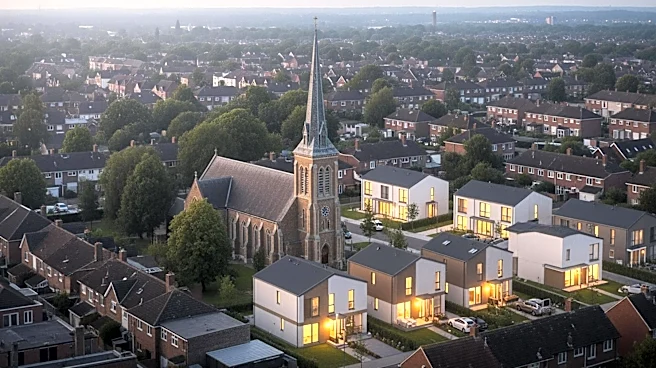
the approval process for affordable housing projects on faith-based land. This initiative is part of a broader movement called 'Yes in God's Backyard' (YIGBY), which seeks to leverage underused land owned by religious groups to create affordable housing opportunities. Religious organizations collectively own over 2.6 million acres across the U.S., which could potentially support up to 800,000 new homes. The bill proposes a 'summary review' process for qualifying developments, allowing them to bypass lengthy public hearings while still adhering to local zoning requirements. At least 30% of the units in these developments must be designated as affordable to qualify.
Why It's Important?
The YIGBY bill represents a significant shift in addressing housing affordability, particularly in states like Connecticut where high median home prices have left many residents priced out of the market. By utilizing surplus land owned by religious organizations, the bill could provide a practical solution to the lack of affordable land and the complexities of the zoning process. This initiative could serve as a model for other states facing similar housing challenges, potentially easing the housing crisis by unlocking new land for development. However, the bill has sparked debate, with opponents concerned about preferential treatment for religious organizations and the potential constitutional implications. Supporters argue that the bill offers a creative solution to a pressing issue, emphasizing the need for clear and predictable development standards.
What's Next?
The bill has cleared the Planning and Development Committee and is awaiting action by the full House and Senate. If passed, it could test the viability of using faith-based land to ease housing shortages in Connecticut. The outcome of this legislative effort could influence similar initiatives across the country, as states look for innovative ways to address housing affordability. Stakeholders, including religious organizations, housing advocates, and local governments, will be closely monitoring the bill's progress and its potential impact on the housing market.