
What's Happening?
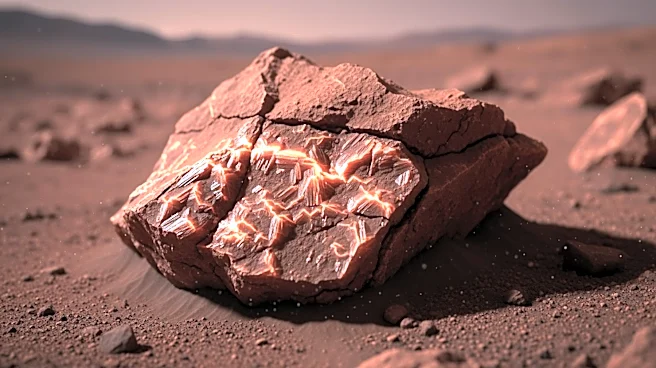
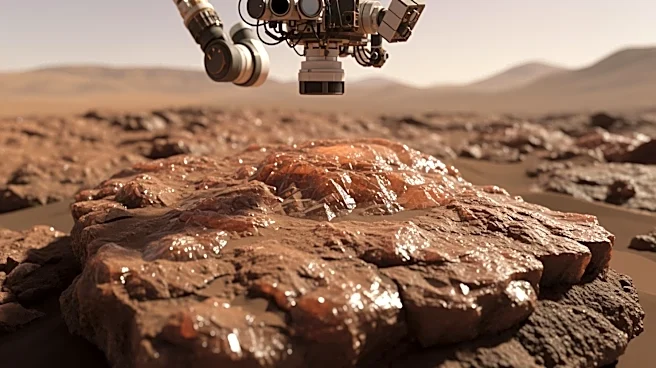
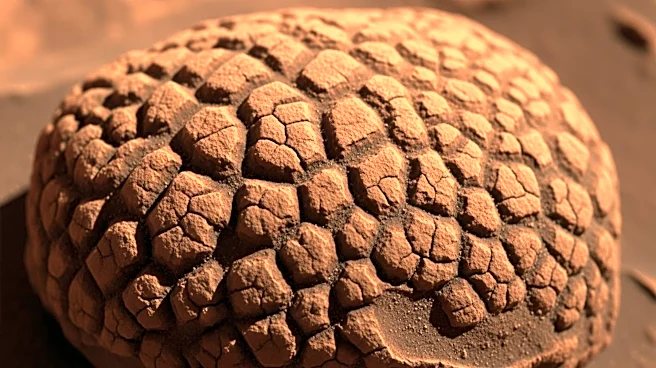
NASA's Curiosity rover has discovered unusual 'dragon skin' patterns on the surface of Mars, characterized by honeycomb-shaped polygons. These formations were observed as the rover moved towards the Antofagasta
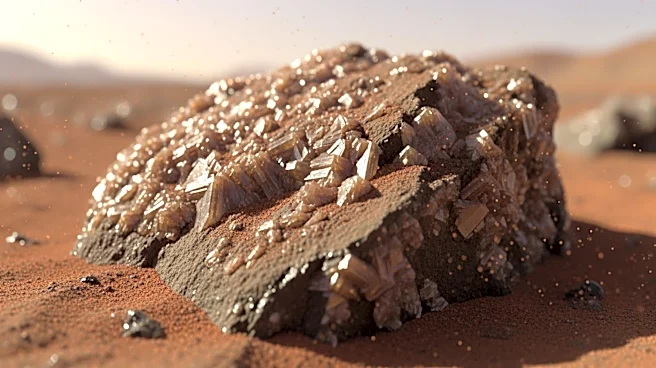
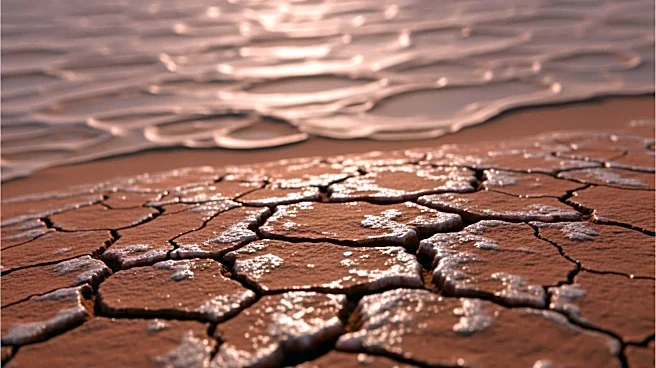
crater. The patterns are significant because they are often associated with water-related processes, indicating that liquid water may have existed on Mars for extended periods. The discovery adds to the understanding of Mars' geological history, suggesting that the planet may have experienced cyclical wet and dry phases. The patterns are more widespread than previously observed, with raised edges that could be due to minerals filling in cracks and resisting erosion.
Why It's Important?
The discovery of these patterns is crucial for understanding Mars' past climate and the potential for life. The presence of water-related formations suggests that Mars may have had conditions suitable for life at some point. This finding could influence future missions and research focused on the search for past life on Mars. It also provides insights into the planet's geological processes, which are essential for planning human exploration. The patterns' resemblance to those formed by wet-dry cycles on Earth further supports the theory of Mars having a more dynamic climate in its past.
What's Next?
NASA's mission team will continue to analyze the images and chemical data collected by Curiosity to determine the composition of the minerals present in the patterns. This analysis will help distinguish between different hypotheses about how these formations were created. The findings could lead to new exploration targets for future missions, as understanding the history of water on Mars is a key objective for planetary science. The ongoing research may also inform the design of instruments for upcoming Mars missions, aimed at uncovering more about the planet's habitability.