




What's Happening?
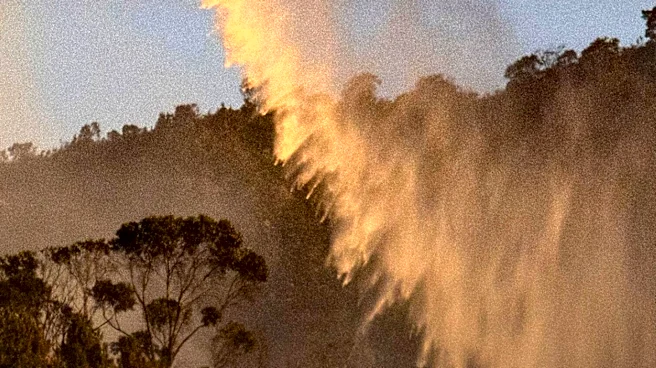
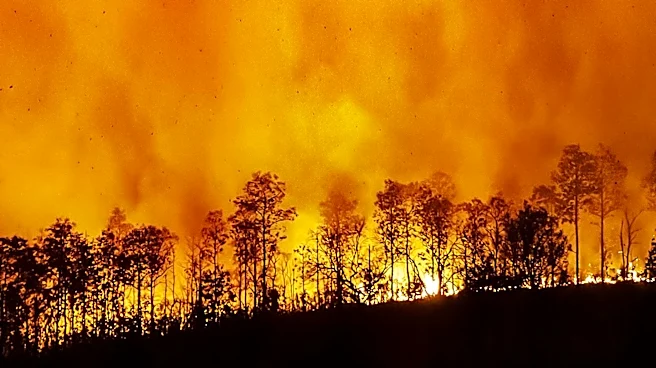
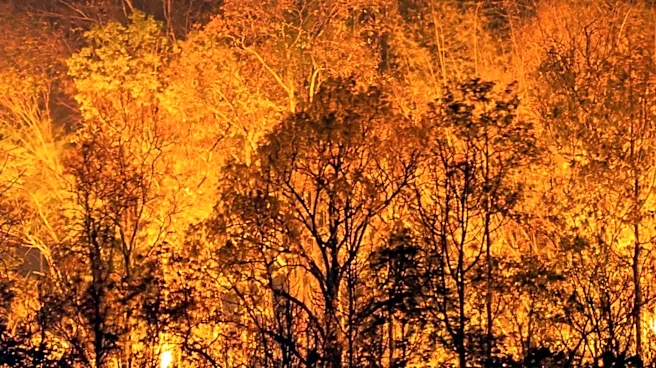
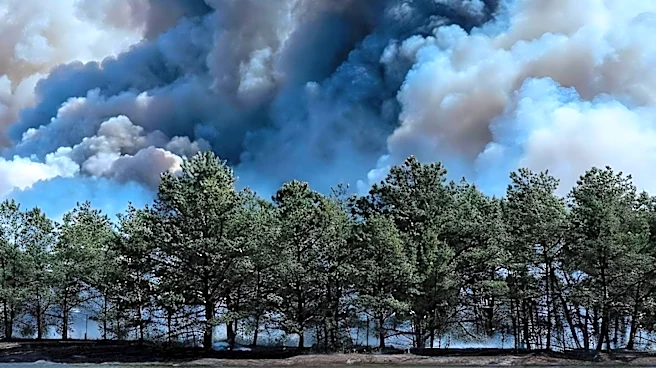
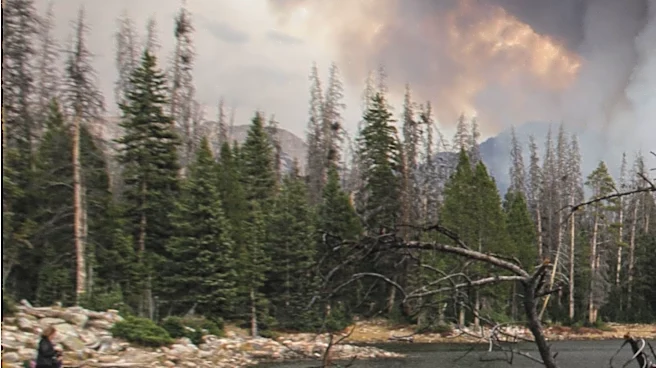
Europe is facing severe wildfires, particularly in France and Spain, due to a combination of an unusually wet winter followed by a prolonged dry spell and record-breaking summer heatwaves. These conditions have turned vegetation into tinder, making it easier
for fires to ignite and spread. The fires have been exacerbated by winds and thunderstorms, which have made firefighting efforts more challenging. The high pressure is expected to delay significant rainfall, increasing the likelihood of further wildfires. The fires are spreading into heavier fuels like shrubs and roots, which burn hotter and longer, complicating containment efforts.
Why It's Important?
The wildfires pose a significant threat to European communities, ecosystems, and economies. The destruction of natural habitats can lead to biodiversity loss and long-term environmental damage. The economic impact includes potential losses in agriculture, tourism, and property damage. The fires also highlight the challenges of managing natural disasters in the context of climate change, as traditional firefighting methods may be insufficient against the backdrop of increasingly extreme weather conditions. The situation underscores the need for comprehensive climate adaptation and mitigation strategies.
What's Next?
European countries may need to invest in more advanced firefighting technologies and strategies to cope with the increasing frequency and intensity of wildfires. There could be a push for stronger climate policies to address the root causes of these extreme weather events. Collaboration among European nations may be necessary to share resources and expertise in managing wildfires. Public awareness campaigns could help communities prepare for and respond to fire risks. Long-term planning will be essential to enhance resilience against future climate-related disasters.