









What's Happening?
The Uptown Theatre, a historic 1925 movie palace in Chicago, recently opened its doors to the public for the first time in nearly 45 years as part of Open House Chicago. The event drew an estimated 8,940 visitors over two days, with lines stretching almost
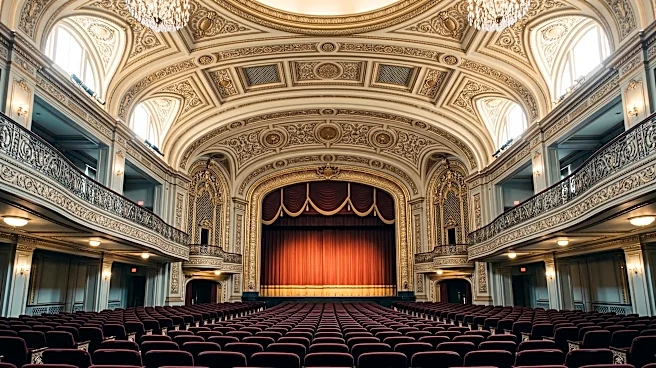
a mile, indicating significant public interest in the long-closed venue. Many attendees expressed awe at the theater's grand lobby, 4,300-seat auditorium, sweeping balcony, and ornate ceiling. The building, designed by the Rapp and Rapp architectural firm, has been closed since December 1981. Robert Loerzel, co-author of 'The Uptown: Chicago’s Endangered Movie Palace,' noted the overwhelming public response and the common sentiment that the experience was 'worth the wait.' The theater's owner, Jerry Mickelson of Jam Productions, hopes to leverage this public enthusiasm to garner support for the building's restoration, which is estimated to cost nearly $200 million. Mickelson is seeking tax increment financing from the city and additional funds from investors.
Why It's Important?
The overwhelming public turnout for the Uptown Theatre's open house highlights a significant cultural and economic opportunity for Chicago. The theater, a masterpiece of architecture, represents a tangible link to the city's rich history of entertainment and urban development. Its restoration could revitalize the Uptown neighborhood, attracting tourism, creating jobs, and fostering a vibrant cultural hub. For the U.S. entertainment industry, bringing such a large and historic venue back into operation could provide a unique space for concerts, performances, and events, distinguishing Chicago from other major cities. The estimated $200 million restoration cost, however, presents a substantial financial challenge, requiring a blend of public and private investment. The success of this restoration effort could serve as a model for preserving other endangered historic venues across the country, demonstrating the economic and cultural benefits of investing in architectural heritage. Conversely, failure to secure funding could mean the continued decay of a significant landmark, representing a loss of cultural capital and potential economic growth for the city.
What's Next?
The immediate next step involves the Uptown Theatre's owner, Jerry Mickelson, actively pursuing funding for the estimated $200 million restoration. This includes seeking tax increment financing (TIF) from the city of Chicago and engaging with potential private investors. The public's enthusiastic response during Open House Chicago provides a strong argument for community and governmental support. Mickelson's company, Jam Productions, has already launched a campaign encouraging people to contact aldermen to advocate for a 'meaningful public commitment' to the theater's restoration. The Chicago Architecture Center and other preservation groups are likely to continue their advocacy efforts. The success of these fundraising and political lobbying efforts will determine the timeline and feasibility of the restoration project. If funding is secured, the project would involve extensive architectural and structural work to bring the nearly century-old building up to modern standards while preserving its historic grandeur. The community will be watching closely to see if this renewed interest translates into concrete action.
Beyond the Headlines
The story of the Uptown Theatre's potential restoration extends beyond mere economics and architecture; it delves into the collective memory and cultural identity of a city. The emotional responses of visitors, many of whom had never been inside, underscore the power of historic spaces to evoke awe and connection. The theater's long closure has created a sense of mystery and longing, making its brief reopening a poignant event. This situation highlights the broader challenge faced by many historic buildings in the U.S.: balancing preservation with economic viability. The debate over public funding for such projects often involves weighing cultural value against other municipal priorities. The Uptown Theatre's journey could become a case study in how community engagement, private investment, and public policy can converge to save and reactivate significant cultural landmarks. It also speaks to the enduring human desire for grand, shared experiences that large, ornate venues like the Uptown Theatre were designed to provide, offering a counterpoint to more modern, utilitarian entertainment spaces.