







What's Happening?
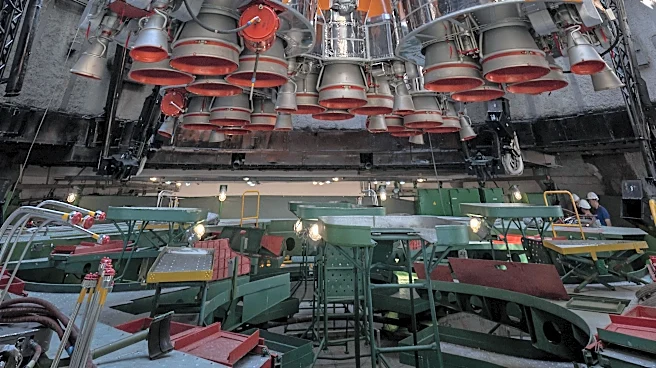
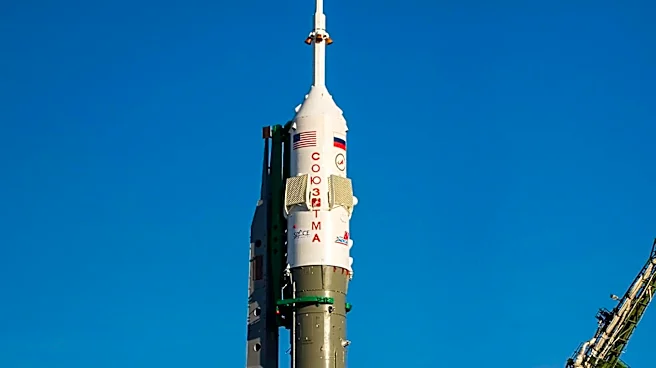
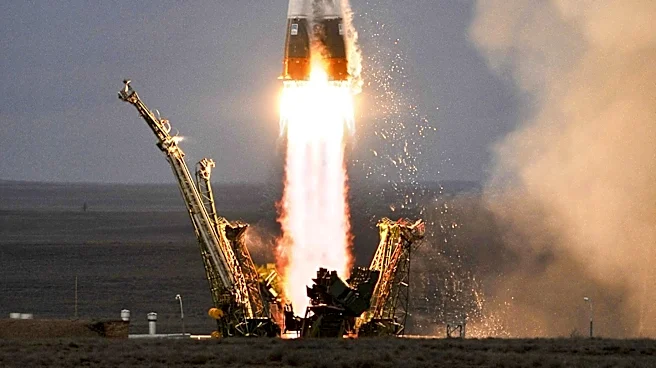
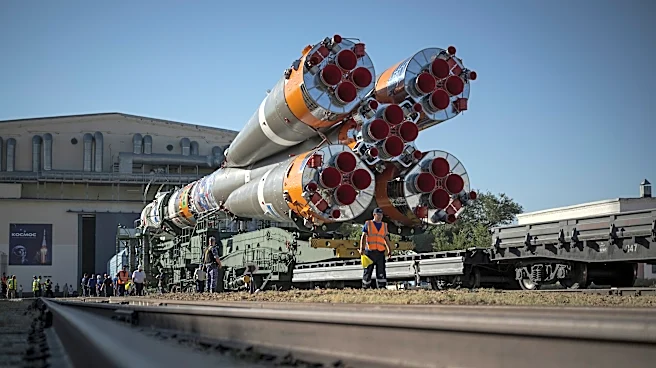
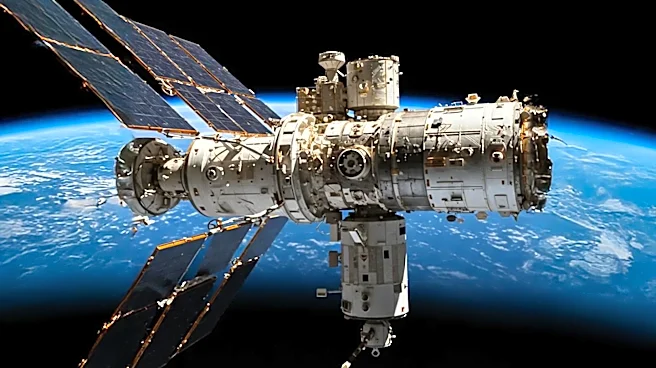
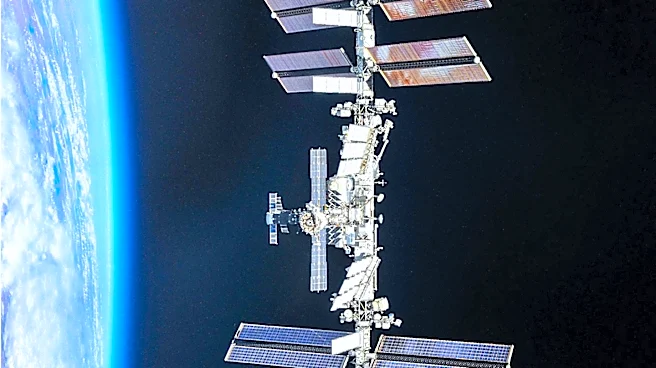
NASA is preparing for the launch of the Soyuz MS-29 spacecraft, which will carry NASA astronaut Anil Menon and Roscosmos cosmonauts Pyotr Dubrov and Anna Kikina to the International Space Station (ISS). The launch is scheduled to take place from the Baikonur
Cosmodrome in Kazakhstan. The crew will spend approximately eight months aboard the ISS, conducting various scientific research and technology demonstrations. Menon will focus on refining in-space production of semiconductor crystals, which are crucial for high-performance computing and medical devices. Additionally, he will explore the use of augmented reality and artificial intelligence for medical procedures in space, potentially reducing the need for Earth-based medical support. The mission will also involve bioprinting vascular constructs in microgravity to advance understanding of the aging process.
Why It's Important?
This mission is significant as it continues to advance human space exploration and the development of technologies that can benefit life on Earth. The research conducted by Menon and his colleagues could lead to breakthroughs in semiconductor manufacturing, which is vital for the tech industry, and in medical technologies that could improve healthcare delivery. The use of augmented reality and artificial intelligence in space medicine could revolutionize how astronauts receive medical care during long-duration missions, such as those planned for Mars. The mission also strengthens international collaboration in space exploration, with NASA and Roscosmos working together to achieve common scientific goals.
What's Next?
Following the launch, the Soyuz spacecraft will dock with the ISS, where the crew will join other astronauts and cosmonauts already aboard. The team will begin their research activities, with results expected to contribute to ongoing studies in space science and technology. The mission's findings could influence future space missions, particularly those involving long-term human presence in space. The collaboration between NASA and Roscosmos may also pave the way for future joint missions, enhancing international partnerships in space exploration.