



What's Happening?
Severe weather conditions in Gaza over the past 72 hours have resulted in the deaths of 14 Palestinians, including three children, according to Munir Al-Boursh, the director general of the Gaza-based Health Ministry. The storms have exacerbated the already
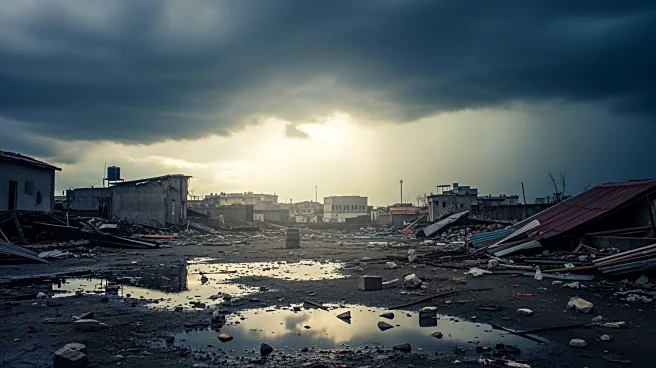
dire living conditions for many Palestinians who have been displaced by the ongoing conflict. Many have been forced to live in tents and temporary shelters, which have been flooded, leaving residents wading through sewage, mud, and debris. Aid group Oxfam has highlighted the systematic obstruction of aid as a contributing factor to the crisis. The harsh weather has destroyed personal belongings and food supplies, leaving many without basic necessities. The humanitarian disaster has affected at least 250,000 people, with more than 27,000 tents swept away. Despite a truce reached in October between Israel and Hamas, which allowed for some aid to enter Gaza, significant challenges remain in delivering essential supplies.
Why It's Important?
The situation in Gaza underscores the severe humanitarian challenges faced by the region, exacerbated by both natural and man-made factors. The inability to provide adequate shelter and resources to displaced populations highlights the ongoing impact of the conflict and the limitations of current aid efforts. The crisis affects not only the immediate safety and well-being of the affected populations but also has broader implications for regional stability and international relations. The obstruction of aid and the destruction caused by the storms illustrate the complex interplay between political decisions and humanitarian needs. The international community's response to this crisis could influence future diplomatic and humanitarian strategies in conflict zones.
What's Next?
The immediate focus will likely be on addressing the urgent humanitarian needs of those affected by the storms. This includes providing adequate shelter, food, and medical supplies to prevent further loss of life. The Israeli agency COGAT has stated its commitment to facilitating the transfer of humanitarian aid, but challenges remain in ensuring that aid reaches those in need. The international community, including the United States, may increase pressure on both Israel and Hamas to ensure that aid is not obstructed and that the terms of the ceasefire are upheld. Long-term solutions will require addressing the underlying political and structural issues that contribute to the ongoing humanitarian crisis in Gaza.
Beyond the Headlines
The situation in Gaza highlights the ethical and legal challenges of providing humanitarian aid in conflict zones. The obstruction of aid raises questions about the responsibilities of occupying powers and the international community in ensuring the protection of civilian populations. The crisis also underscores the need for sustainable solutions that address both immediate humanitarian needs and long-term political resolutions. The role of international organizations and governments in mediating and facilitating aid delivery will be crucial in preventing future crises of this nature.