



What's Happening?
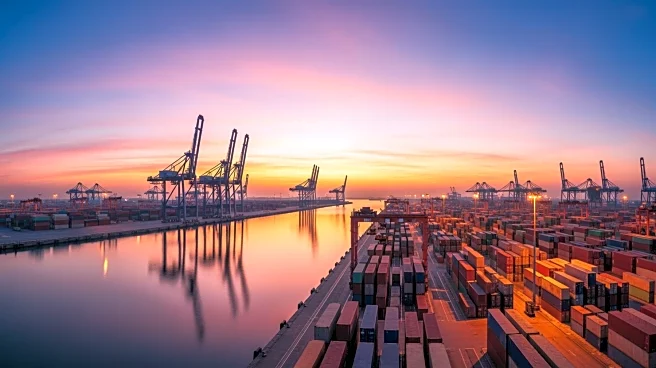
China has officially transformed its southernmost province, Hainan, into the world's largest free trade port by area, surpassing the size of Belgium. This strategic move, effective from December 2025, aims to position Hainan as a major global trade hub,
rivaling cities like Hong Kong, Singapore, and Dubai. The initiative is part of China's broader economic strategy to counter global protectionism trends by creating a separate customs zone with favorable regulatory conditions. The province now operates under a 'two-line' customs system, allowing most goods to enter freely while maintaining standard customs rules between Hainan and mainland China. This development is expected to make Hainan a highly business-friendly jurisdiction, with a flat corporate tax rate of 15% and expanded visa-free entry for citizens from 86 countries.
Why It's Important?
The transformation of Hainan into a free trade port is significant as it represents China's strategic response to global economic uncertainties and protectionist policies. By establishing a business-friendly environment with low taxes and minimal trade barriers, China aims to attract international businesses and investments, potentially reshaping global trade dynamics. This move could enhance China's influence in the Asia-Pacific region and provide a competitive alternative to established trade hubs. The initiative also reflects China's ongoing efforts to integrate capitalist mechanisms within its socialist market economy, potentially boosting its global economic dominance.
What's Next?
Looking ahead, China plans to further develop Hainan's trade and investment systems, aiming for 'institutional maturity' by 2035 and significant global influence by mid-century. The province's unique regulatory framework, including exemptions from mainland foreign-exchange controls and broader internet access, is expected to attract foreign companies and universities. As Hainan continues to evolve, it may serve as a model for other regions seeking to balance openness with domestic security. The success of this initiative could influence global trade policies and encourage other nations to reconsider their protectionist stances.