
What's Happening?
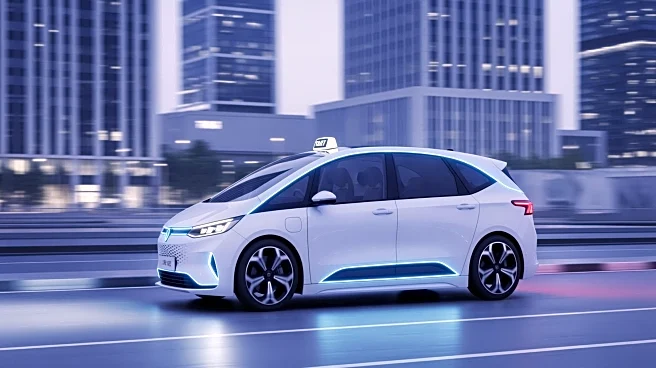
WeRide and Uber have initiated a robotaxi service in Dubai, in collaboration with the city's Roads and Transport Authority (RTA). The service, which is currently operational in parts of Umm Suqeim and Jumeirah,
is accessible through the Uber app. Initially, the service includes a vehicle specialist on board, with plans to transition to a fully driverless commercial service by early 2026. This launch follows a pilot program that began after the partnership was announced in April 2025. Tawasul is the main fleet operator for WeRide vehicles on the Uber platform. WeRide has approximately 150 autonomous vehicles in the Middle East, with over 100 being robotaxis. The initiative supports Dubai's Self-Driving Transport Strategy, aiming for 25% of journeys to be autonomous by 2030.
Why It's Important?
The launch of the robotaxi service in Dubai marks a significant step towards the integration of autonomous vehicles in urban transport systems. This development aligns with Dubai's strategic goals to enhance mobility and reduce reliance on human-driven vehicles. The collaboration between WeRide and Uber could set a precedent for similar partnerships globally, potentially accelerating the adoption of autonomous technology in public transport. The initiative also reflects a growing trend towards shared mobility solutions, which can lead to reduced traffic congestion and lower emissions. For Uber, this move strengthens its position in the autonomous vehicle market, while WeRide expands its footprint in the Middle East, showcasing its technological capabilities.
What's Next?
As the service transitions to a fully driverless model, it will be crucial to monitor its impact on traffic patterns and public acceptance. The success of this initiative could influence regulatory frameworks and encourage other cities to adopt similar technologies. Stakeholders, including government bodies and private companies, will likely evaluate the service's performance and scalability. Additionally, the expansion of autonomous services may prompt further investments in infrastructure and technology development, fostering innovation in the mobility sector.