







What's Happening?
The University of Chicago is significantly expanding its research into Climate Systems Engineering (CSE), establishing a new cluster that includes the addition of ten new faculty lines. This initiative aims to deepen the understanding of the benefits,
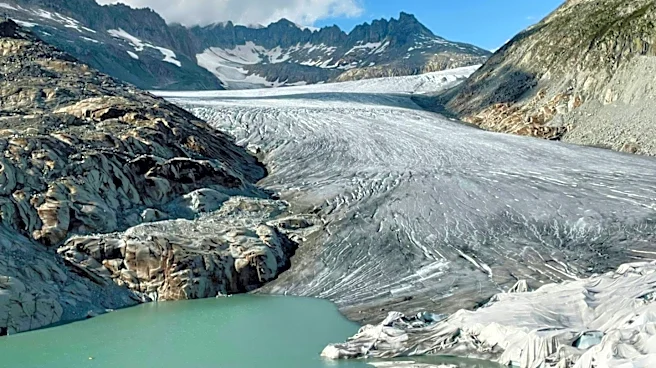
risks, and governance of technologies designed to reduce the impact of accumulated greenhouse gases. The scope of research within the CSE initiative is broad, encompassing open-system carbon removal methods like enhanced rock weathering, solar geoengineering, and localized interventions to mitigate glacial ice loss. The university is actively seeking early-career scholars for its 2027-29 cohort of CSEi Research Fellows, offering two-year positions with competitive salaries and research funding. This interdisciplinary effort welcomes contributions from various fields, including the sciences, humanities, social sciences, public policy, and law, to address the complex challenges of managing industrial civilization on a fragile planet.
Why It's Important?
This expansion by the University of Chicago is important because it signifies a growing academic and scientific commitment to developing and understanding geoengineering solutions as a response to accelerating climate change. The focus on both carbon removal and solar geoengineering techniques highlights the recognition that traditional emission reduction strategies alone may be insufficient to avert catastrophic warming in the short term. By fostering interdisciplinary research and educating future leaders, the initiative aims to provide critical insights into the efficacy, risks, and ethical considerations of these technologies. The potential for geoengineering to rapidly cool the planet, as suggested by experts, could offer a crucial, albeit temporary, reprieve from the immediate dangers of non-linear warming events. However, the emphasis on global agreements and careful governance underscores the significant international implications and potential for unintended consequences, such as impacts on food production and human health, that must be thoroughly addressed before widespread deployment.
What's Next?
The University of Chicago's Climate Systems Engineering initiative will continue to evolve its research topics based on the interests of collaborating researchers and policy-relevant questions from governments and civil society. The program is actively recruiting its 2027-29 cohort of CSEi Research Fellows, with applications due by November 2, 2026. These fellows will work closely with faculty mentors, developing strong research networks and contributing to the understanding of climate systems engineering. The initiative's ongoing work will likely inform future policy discussions and international collaborations regarding the responsible development and deployment of geoengineering technologies. As research progresses, there will be a continued focus on assessing the techno-economic aspects, decision-making frameworks, and risk analyses associated with these climate interventions, aiming to provide a comprehensive understanding for global stakeholders.
Beyond the Headlines
Beyond the immediate scientific and policy implications, the University of Chicago's geoengineering initiative touches upon profound ethical and societal questions. The very concept of intentionally altering Earth's climate systems raises concerns about humanity's role in managing planetary processes and the potential for unforeseen ecological and social disruptions. The need for global agreements to manage geoengineering highlights the complex geopolitical challenges, as the benefits and risks may not be evenly distributed across nations. Furthermore, the initiative's focus on educating students in this field suggests a long-term shift in how future generations will approach climate change, potentially moving towards a more interventionist paradigm. This could lead to debates about intergenerational equity, the moral hazard of relying on technological fixes, and the fundamental relationship between human civilization and the natural environment.