



What's Happening?
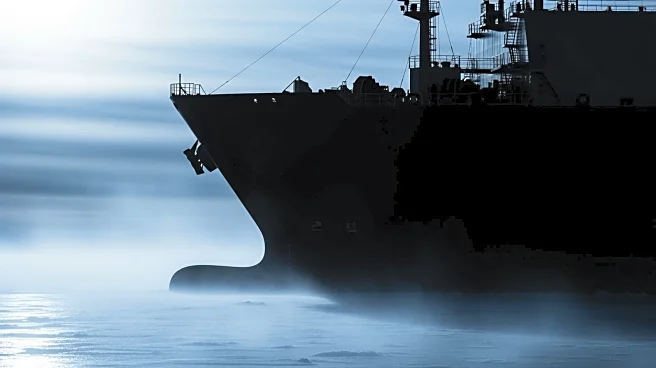
A recent explosion involving the Arctic Metagaz, a liquified natural gas (LNG) carrier, has raised significant concerns about the safety and environmental risks associated with LNG shipping. The 23-year-old vessel, linked to Russia's 'dark fleet,' exploded
in the Mediterranean Sea while en route to Port Said. The explosion, reportedly caused by a drone strike amid the ongoing Russia-Ukraine conflict, resulted in no casualties as the crew was safely rescued. The incident has prompted European leaders to express fears of a potential ecological disaster, given the precarious condition of the vessel and its specialized cargo. The Arctic Metagaz remains adrift near Malta, posing a continued threat. This event underscores the broader risks of LNG transport, especially as the number of LNG carriers is expected to increase significantly by 2035.
Why It's Important?
The explosion of the Arctic Metagaz serves as a stark reminder of the inherent dangers in the global LNG supply chain. As the demand for LNG grows, particularly from Russian Arctic sources, the number of carriers is projected to rise, increasing the risk of similar incidents. LNG is highly flammable and explosive, requiring stringent safety measures. The incident highlights the potential for significant environmental and safety hazards, not only to the maritime industry but also to coastal communities and ecosystems. With the International Maritime Organization (IMO) set to discuss the decarbonization of global shipping, this incident emphasizes the need for robust regulatory frameworks to manage the risks associated with LNG transport.
What's Next?
The International Maritime Organization (IMO) is scheduled to meet in April to discuss the future of shipping fuels and climate regulations. The Arctic Metagaz incident is likely to influence these discussions, as regulators consider the safety, environmental, and climate implications of expanding LNG fleets. The European Union's planned restriction on Russian gas imports by 2027 further complicates the geopolitical landscape, potentially driving increased LNG traffic through sensitive maritime regions. Stakeholders will need to address these challenges to prevent future incidents and mitigate their impacts.
Beyond the Headlines
The Arctic Metagaz explosion highlights the broader implications of LNG transport beyond immediate safety concerns. Methane, the primary component of LNG, is a potent greenhouse gas, contributing significantly to global warming. The incident underscores the need for a comprehensive approach to managing LNG's environmental footprint, including its role in climate change. As the global community seeks to transition to cleaner energy sources, the risks associated with LNG transport must be carefully balanced against its economic and energy benefits.