





What's Happening?
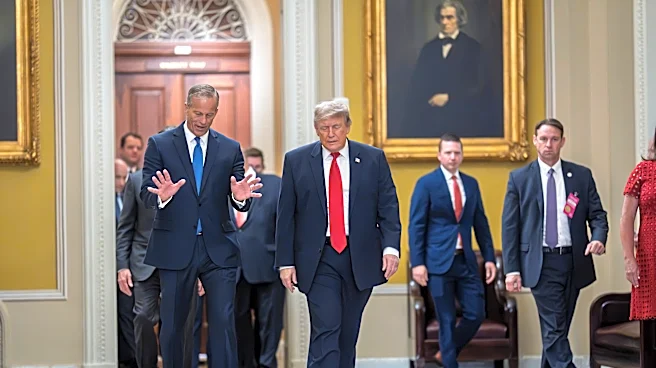
President Donald Trump has postponed the signing of the 21st Century ROAD to Housing Act, a comprehensive legislative package aimed at addressing housing affordability and increasing home construction. Despite bipartisan support and passage in both the House
and Senate, Trump has withheld his signature, demanding that Congress first pass legislation requiring proof of citizenship for all voters. The housing bill seeks to reduce federal regulations, streamline construction processes, and curb corporate landlords' influence, with the goal of making housing more affordable for renters and potential homeowners. The delay in signing the bill has raised concerns about its potential impact on the housing market, particularly in terms of increasing the supply of affordable homes.
Why It's Important?
The delay in signing this significant housing legislation underscores the complex interplay between federal policy and local housing markets. The bill's provisions are designed to address the chronic shortage of affordable housing, a pressing issue as home prices and rents have soared in recent years. By postponing the bill's enactment, the administration risks delaying much-needed relief for homebuyers and renters facing high housing costs. The situation also highlights the political leverage being exercised by the president, linking housing policy to broader electoral issues such as voter ID laws. This move could have long-term implications for housing policy and political negotiations in Congress.
What's Next?
If President Trump continues to withhold his signature, Congress may need to consider overriding a potential veto, given the bill's strong bipartisan support. The delay could also prompt further negotiations between the White House and Congress on related legislative priorities. In the meantime, housing advocates and industry stakeholders will likely continue to push for the bill's enactment, emphasizing the urgent need for increased housing supply and affordability measures. The outcome of this legislative standoff could influence future housing policies and the political landscape surrounding housing issues.