
What's Happening?
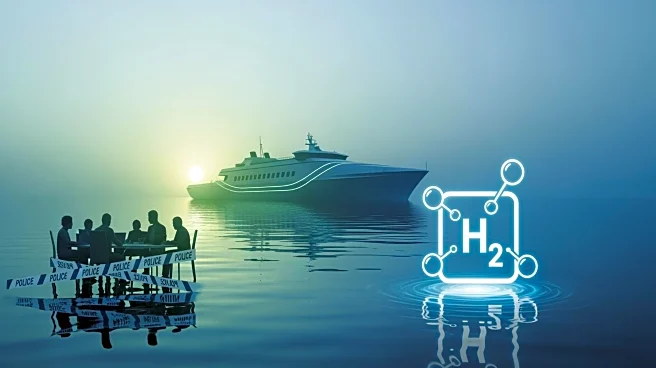
Lloyd's Register has released a report assessing hydrogen's potential in maritime decarbonization. The report, part of the 'Fuel for thought' series, explores hydrogen's advantages and challenges, such
as its low energy density and storage requirements. Despite these hurdles, hydrogen is seen as a key player in reducing maritime emissions, especially as regulatory pressures increase. The report notes that hydrogen-capable vessels are still a minority, representing less than 0.5% of the global orderbook, but highlights opportunities for early adoption in short-sea trades.
Why It's Important?
As the maritime industry faces increasing regulatory pressure to cut emissions, hydrogen offers a promising solution. The EU ETS and FuelEU Maritime regulations, along with the IMO's 2050 net-zero ambition, are driving interest in hydrogen. However, significant investment in infrastructure and production is needed to make hydrogen a viable option. The report underscores the importance of developing robust certification schemes and lifecycle assessments to ensure hydrogen's sustainable adoption in the maritime sector.
What's Next?
The maritime industry will need to invest in hydrogen infrastructure and technology to meet regulatory demands. Early adoption is likely in short-sea trades, where hydrogen's storage constraints are less of an issue. As hydrogen production scales, the industry will compete with other sectors for resources, necessitating strategic planning and collaboration. The development of hydrogen-ready designs and hybrid fuel strategies will be crucial for shipowners looking to future-proof their assets.