





What's Happening?
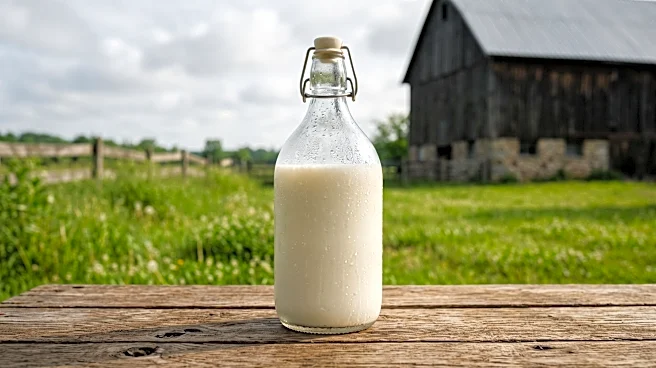
A national Omnipoll survey commissioned by the Food Safety Information Council has found that one in six Australian adults are consuming raw, unpasteurized milk products, despite their sale for human consumption being illegal. The survey, which included
over 1200 adults, was released during Australian Food Safety Week. Council CEO Lydia Buchtmann highlighted that consumption is more prevalent among men (20%), adults aged 25 to 34 (29%), and those aged 36 to 49 (23%). Furthermore, raw milk consumption is higher in households with children (25%), capital cities (18%), and higher-income households (20% earning over $90,000 annually). The primary reasons for pasteurization are to eliminate harmful bacteria such as salmonella, listeria, yersinia, campylobacter, staphylococcus, and E. coli, and to prevent potentially fatal zoonotic diseases like brucellosis and tuberculosis. Most respondents sourced raw milk directly from farms (nearly three-quarters), while 15% owned a cow or participated in a 'cow share' program, and 27% purchased it online.
Why It's Important?
The widespread consumption of illegal raw milk in Australia poses significant public health risks, particularly for vulnerable populations like children. The Food Safety Information Council emphasizes that pasteurization is a critical process designed to kill dangerous bacteria and prevent serious illnesses. The survey's finding that raw milk consumption is higher in households with children is particularly concerning, as children are more susceptible to foodborne illnesses and their complications. The council estimates that food poisoning in Australia leads to 4.67 million cases annually, resulting in 47,000 hospitalizations and an economic cost of $3 billion. This trend undermines established food safety regulations and could lead to an increase in preventable diseases, placing a greater burden on the healthcare system and impacting public trust in food safety standards. The illegal nature of raw milk sales for human consumption also highlights a challenge in enforcing public health policies.
What's Next?
The Food Safety Information Council is urging the public to avoid consuming raw milk to mitigate the risks of foodborne illnesses. The findings of this survey are likely to prompt increased public awareness campaigns regarding the dangers of unpasteurized dairy products. Authorities may also consider enhanced enforcement measures to curb the illegal sale of raw milk, especially given the various channels through which consumers are acquiring it, including direct farm sales and online purchases. The data on demographic consumption patterns could inform targeted educational initiatives to reach specific groups, such as younger adults and higher-income households, who are more likely to consume raw milk. Continued monitoring of raw milk consumption trends and associated health outcomes will be crucial for public health officials.
Beyond the Headlines
The preference for raw milk reflects a broader societal trend towards 'natural' or 'unprocessed' foods, often driven by a desire to return to traditional practices or a distrust of industrial food systems. This movement, while seemingly benign, can overlook the scientific advancements in food safety that have significantly reduced the incidence of foodborne diseases. The ethical implications involve balancing individual consumer choice with collective public health protection. The illegal status of raw milk for human consumption underscores a regulatory challenge where consumer demand for certain products clashes with established health and safety standards. This situation could also highlight a gap in public understanding regarding the benefits of food processing techniques like pasteurization, leading to a romanticized view of 'natural' products that may carry inherent risks. The economic impact of foodborne illnesses further emphasizes the importance of adhering to scientifically proven food safety measures.