
What's Happening?
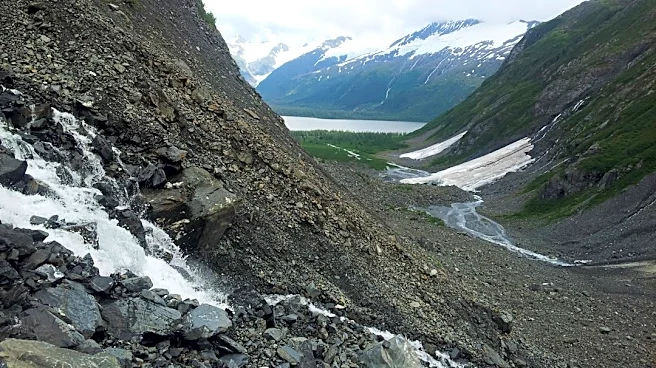
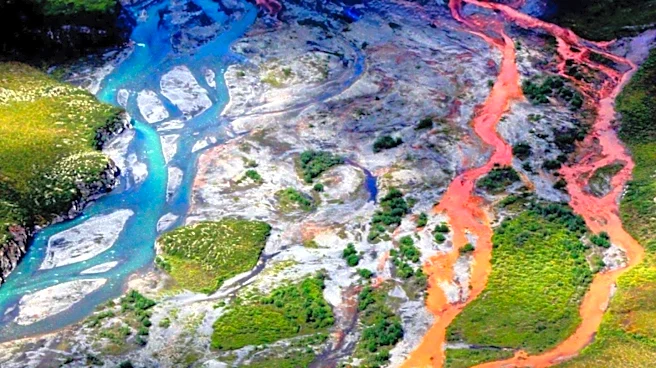
A new study has revealed that rivers in Alaska and northern Canada are turning orange and becoming more acidic due to minerals leaching from thawing tundra. This phenomenon, referred to as 'rusting,' is a direct
consequence of the Arctic warming, which causes permafrost to thaw and release iron and sulfuric acid into the waterways. Researchers found that these 'rusting' waters are more metallic and acidic than drainage from metal mines. The study, published in AGU Advances, identified iron and sulfuric acid throughout watersheds in the Brooks Range, with metal levels in the Salmon River increasing as much as seventy-fold some 60 miles downstream. The rusting process began in the summer of 2019, the hottest summer on record in Alaska, and has since been observed in over 200 rivers in the state.
Why It's Important?
The 'rusting' of Alaskan rivers poses a significant environmental threat, particularly to aquatic ecosystems and local wildlife. The increased acidity and metal concentrations can be toxic to fish and other organisms, potentially leading to ecosystem collapse. There are growing concerns that this phenomenon may have already contributed to the decline of the chinook salmon fishery in the region, which is vital for both ecological balance and the livelihoods of indigenous communities. This unexpected environmental change highlights the far-reaching and complex consequences of climate change, demonstrating how thawing permafrost can trigger unforeseen geochemical processes with severe ecological impacts. The scale of the problem, affecting hundreds of rivers across the Arctic, underscores the urgency of understanding and mitigating climate change effects.
What's Next?
Scientists are just beginning to understand the full implications of these 'rusting' waters for wildlife and ecosystems. Further research will be crucial to assess the long-term ecological damage and to identify potential mitigation strategies. Monitoring the spread and intensity of this phenomenon across the Arctic will be essential for tracking its progression and impact. Policymakers and environmental agencies will need to consider these findings when developing climate change adaptation and conservation plans for the Arctic region. The unexpected nature of this process, as noted by environmental toxicologist Brett Poulin, suggests that other unforeseen environmental consequences of a warming climate may yet emerge, necessitating continuous scientific investigation and proactive environmental management.
Beyond the Headlines
The 'rusting' of Arctic rivers represents a profound and previously unpredicted consequence of climate change, challenging existing models and forecasts of environmental shifts. This development underscores the interconnectedness of Earth's systems, where changes in one component, such as permafrost thaw, can trigger cascading effects across entire ecosystems. The ethical implications revolve around the responsibility to protect pristine environments and the indigenous communities that depend on them, especially as these changes threaten traditional ways of life and food security. Culturally, the transformation of once-clear rivers into orange, acidic waterways could alter the landscape and the relationship local populations have with their environment. This situation serves as a stark reminder that climate change impacts are not always gradual or predictable, often presenting novel challenges that require innovative scientific and policy responses.