


What's Happening?
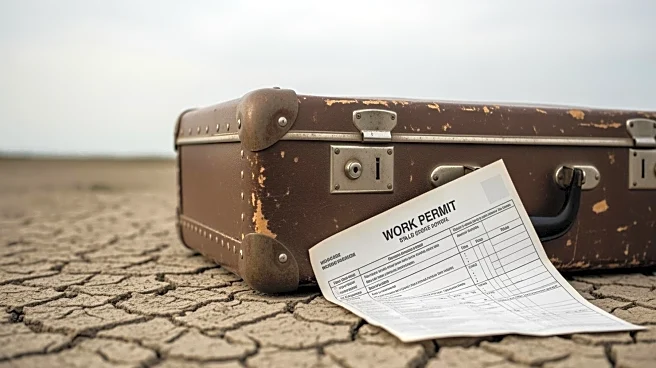
A group of approximately 500 migrants marched through southern Mexico on Wednesday, protesting prolonged delays in obtaining necessary paperwork to work legally. The migrants, who began their journey from Tapachula near the Guatemalan border, are seeking
permission to relocate to areas with better employment opportunities while their immigration status is processed. Tapachula has become a central hub for migrants, particularly those from Cuba, who have been deported by the Trump administration. Despite the commonality of such marches, they typically do not extend beyond southern Mexico, with groups dispersing within days. The march was monitored by the National Guard, the National Migration Institute, and local police, who did not intervene. The Mexican government announced a new agreement to enhance labor inclusion for migrants in southern states, but civil society groups have raised concerns about the costs and risks associated with obtaining documentation.
Why It's Important?
The protest highlights ongoing challenges faced by migrants in Mexico, particularly in securing legal work opportunities. The situation underscores the broader issues of migration management and the humanitarian needs of transient populations. The delays in processing paperwork and the associated costs, which are reportedly as high as $2,300 for documentation that should be free, exacerbate the difficulties faced by migrants. This situation not only affects the migrants' ability to support themselves and their families but also impacts local economies and social services in regions like Tapachula. The increased militarization of Mexico's southern border and the Northern Triangle has intensified the risks and abuses faced by migrants, raising ethical and human rights concerns.
What's Next?
The Mexican government's recent agreement to boost labor inclusion could provide some relief, but its implementation and effectiveness remain to be seen. Migrants and advocacy groups will likely continue to push for more efficient and transparent processes for obtaining work authorization. The situation may also prompt further dialogue between Mexico and the United States regarding migration policies and humanitarian support. Monitoring by civil society groups will be crucial in ensuring that the rights and needs of migrants are addressed, and that any new policies are implemented fairly and effectively.
Beyond the Headlines
The protest and the broader migration issues in southern Mexico reflect deeper systemic challenges in managing migration flows in the region. The situation raises questions about the role of international cooperation in addressing migration and the responsibilities of both sending and receiving countries. The ethical implications of charging migrants for free documentation and the human rights concerns associated with increased border militarization are significant. These issues may influence future policy discussions and international relations, particularly between Mexico and the United States.