




What's Happening?
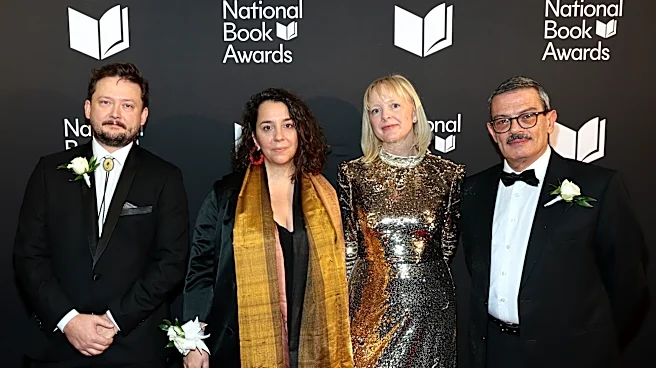
The Authors Guild is hosting a virtual discussion titled 'Banned Books: How Authors & Readers Can Respond,' addressing the ongoing issue of book bans in communities and schools across the U.S. The panel features National Book Award winner Malinda Lo,
author of 'Last Night at the Telegraph Club,' and two-time National Book Award finalist Patricia McCormick, known for 'SOLD' and 'Never Fall Down.' Cheryl L. Davis, General Counsel for the Authors Guild, will moderate the discussion. The event aims to explore the real-world impacts of book banning on children, readers, and writers, particularly concerning LGBTQIA+ and BIPOC stories. Topics will include emotional and practical responses to book challenges, the impact on authors, strategies for community involvement like running for library boards, contacting politicians, and donating to libraries in affected areas.
Why It's Important?
This discussion is crucial as book bans continue to affect access to diverse literature and freedom of expression in the United States. The participation of award-winning authors like Malinda Lo and Patricia McCormick brings significant weight to the conversation, highlighting the personal and professional challenges faced by creators whose works are targeted. The Authors Guild's initiative provides a platform for practical strategies, empowering authors, readers, and concerned citizens to actively resist censorship. The focus on LGBTQIA+ and BIPOC stories underscores the disproportionate impact of these bans on marginalized communities, limiting representation and access to narratives that reflect a broad spectrum of human experience. The event also emphasizes the role of legal and community action in safeguarding intellectual freedom and the rights of authors and readers.
What's Next?
The virtual discussion will provide attendees with actionable insights and strategies to combat book banning, potentially leading to increased community engagement and advocacy efforts. Following the event, participants may be encouraged to implement the discussed tactics, such as running for library boards, contacting local and state politicians, and supporting libraries in areas affected by bans. The Authors Guild and similar organizations are likely to continue monitoring legislative efforts related to free speech and book access, potentially initiating or supporting further legal challenges against restrictive laws. The ongoing dialogue aims to foster a more informed and active public that can push back against censorship and advocate for inclusive literary environments in schools and public libraries across the nation.
Beyond the Headlines
The persistent wave of book bans reflects deeper societal tensions regarding cultural values, education, and the control of information. These challenges often extend beyond specific books to broader debates about parental rights, curriculum development, and the role of libraries in a democratic society. The targeting of LGBTQIA+ and BIPOC narratives points to systemic issues of representation and the ongoing struggle for inclusivity in educational and public spaces. The discussion hosted by the Authors Guild not only addresses immediate practical responses but also implicitly highlights the ethical imperative to protect intellectual freedom and ensure that future generations have access to a wide array of perspectives. The long-term implications include potential chilling effects on authors, who might self-censor to avoid controversy, and the erosion of critical thinking skills among students exposed to a limited range of ideas.