




What's Happening?
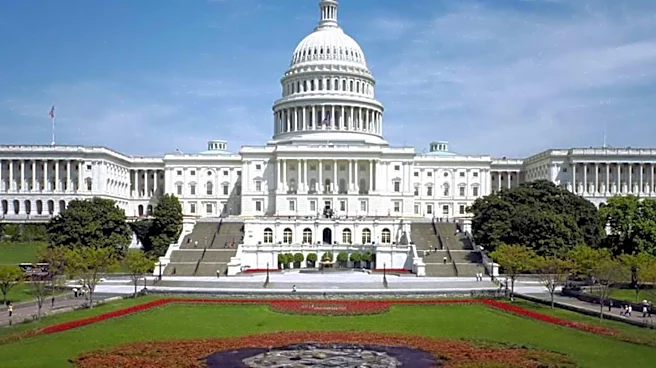
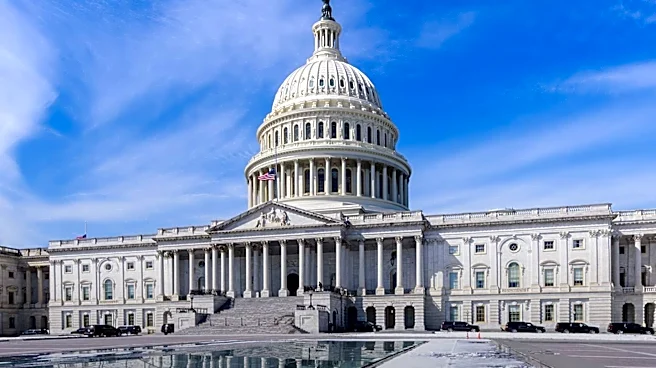
Armenian American advocates from over 30 states recently converged on Capitol Hill for Strategic Advocacy 2026, a two-day mobilization organized by the Armenian National Committee of America (ANCA). They visited all 435 U.S. House and 100 U.S. Senate
offices, conducting over 150 congressional policy consultations. The primary message delivered was a call for Congress to cease underwriting Azerbaijan, citing concerns over the Aliyev government holding Armenian hostages, destroying Christian churches, occupying sovereign land, and blocking the return of Artsakh refugees. Advocates pressed for the enforcement of the Section 907 ban on U.S. tax dollars to Baku and urged an upgrade to the U.S.-Armenian security partnership. A key request was a bicameral, bipartisan letter, led by Senators Gary Peters (D-MI) and Adam Schiff (D-CA) and Representatives Gus Bilirakis (R-FL) and Frank Pallone (D-NJ), urging the Administration to withhold U.S. military assistance to Azerbaijan. This letter follows the Trump Administration’s extension of the waiver of Section 907 of the FREEDOM Support Act, despite Azerbaijan’s actions.
Why It's Important?
This advocacy effort is significant as it directly challenges U.S. foreign policy and aid distribution, particularly concerning a region with ongoing geopolitical tensions. The ANCA's push to enforce Section 907 of the FREEDOM Support Act, which restricts U.S. assistance to Azerbaijan, highlights a contentious debate within U.S. foreign relations. The advocates argue that continued U.S. military aid to Azerbaijan emboldens actions perceived as hostile towards Armenians, including the detention of hostages, destruction of cultural heritage, and territorial occupation. If successful, this lobbying could lead to a re-evaluation of U.S. military assistance to Azerbaijan, potentially shifting regional power dynamics and influencing the security landscape in the South Caucasus. It also underscores the influence of diaspora communities in shaping U.S. foreign policy, particularly during midterm election cycles when congressional members are highly attentive to constituent concerns. The debate also touches upon human rights, religious freedom, and the principle of self-determination for the people of Artsakh.
What's Next?
The bipartisan letter calling for the withholding of U.S. military assistance to Azerbaijan remains open for signatures, and the ANCA is actively working to expand its support in both chambers of Congress. Armenian Americans are encouraged to contact their Senators and Representatives to urge them to sign the letter. The ANCA will continue to track the performance of incumbent Senators and Representatives on pro-Armenian legislative metrics, issuing Report Cards and Endorsements in the coming weeks to inform voters ahead of the November 3 midterm elections. Advocates plan to conduct follow-up meetings in district offices to maintain pressure on lawmakers. The ongoing efforts aim to secure the release of Armenian hostages, facilitate the return of Artsakh's displaced population, and ensure Armenia's sovereignty and security. The outcome of these efforts could influence future U.S. legislative actions, including potential sanctions against Azerbaijani leaders and increased support for Armenia.
Beyond the Headlines
The ANCA's advocacy campaign delves into deeper implications beyond immediate policy changes, touching upon the ethical dimensions of U.S. foreign aid and the long-term consequences of international inaction on human rights and cultural preservation. The destruction of Armenian churches and the occupation of territory raise questions about the protection of religious and cultural heritage in conflict zones, and the responsibility of international actors to intervene. The debate also highlights the complex interplay between national interests, human rights, and geopolitical stability. The ANCA's emphasis on educating American classrooms about the Armenian Genocide through the Armenian Genocide Education Act (H.R. 2585) underscores a broader effort to prevent future atrocities by acknowledging past ones. This initiative seeks to foster a more informed public and political discourse on genocide recognition and prevention, potentially influencing future U.S. responses to similar global crises and shaping a more ethically conscious foreign policy.