

What's Happening?
Siam Legal International, a law firm in Thailand, has underscored the importance of trade compliance for international businesses following a visit to the newly launched Multimodal Logistics Hub at Suvarnabhumi Airport. This visit, organized by the Joint
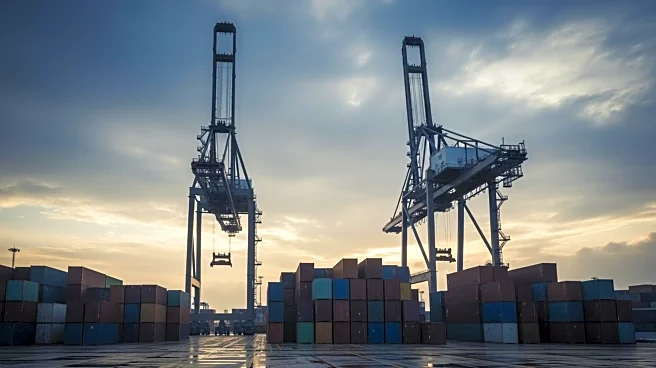
Foreign Chambers of Commerce in Thailand, highlighted the hub's role in enhancing Thailand's logistics infrastructure. The facility, located in Cargo Zone 3, allows for seamless cargo transfer between land, sea, and air without entering Thailand's customs territory, thus reducing administrative burdens and speeding up transit times. The hub is managed by AOT Ground Aviation Services, Thai Customs, and Asia Ground Service, which coordinate operations and ensure regulatory compliance. The facility's advantages include reduced paperwork, faster processing, and a 30-day customs storage window. It also employs E-lock technology for real-time cargo tracking, enhancing security and transparency.
Why It's Important?
The development of the Multimodal Logistics Hub positions Thailand as a key logistics and distribution center in the ASEAN region, offering significant opportunities for foreign investors. However, it also raises the bar for compliance, as businesses must ensure their documentation aligns with Thai Customs requirements to avoid delays and disputes. This expansion could attract more global logistics operators, such as FedEx and DHL, to utilize the facility, thereby boosting Thailand's economy. For U.S. businesses, understanding and adhering to these compliance standards is crucial for successful operations in the region, potentially influencing trade dynamics and investment strategies.
What's Next?
As Thailand continues to develop its logistics capabilities, international businesses will need to adapt to the evolving regulatory landscape. Companies may need to invest in compliance training and systems to ensure alignment with Thai regulations. The success of the Multimodal Logistics Hub could lead to further infrastructure investments and expansions, potentially increasing Thailand's influence in regional trade. Stakeholders, including logistics companies and foreign investors, will likely monitor these developments closely to capitalize on emerging opportunities.