



What's Happening?
Astronomers have identified a large object, temporarily named R631, orbiting the Sun beyond Neptune. This celestial body, approximately 62 miles wide, exhibits an unusual retrograde orbit, moving in the opposite direction to most other objects in our
solar system. Its trajectory is also highly inclined, cutting through the solar system at a steep 142-degree angle. This behavior contradicts the conventional understanding of solar system formation, where objects typically orbit in the same direction and on a relatively flat plane, a result of the initial dust cloud flattening and spinning. R631 is currently located about 3 billion miles from the Sun and completes an orbit every 548 years. The anomaly has led researchers to question its origin, with theories suggesting it could be a massive comet from outside our solar system that was captured by the Sun's gravity, or an object that originated within our solar system but was flung into a reverse orbit due to gravitational interactions with gas giants like Neptune or Jupiter.
Why It's Important?
The discovery of R631 challenges fundamental models of solar system formation and dynamics. The prevailing theory posits that all celestial bodies within a solar system should orbit in the same direction, a consequence of the conservation of angular momentum during the system's genesis. R631's retrograde and highly inclined orbit suggests either an external origin, implying our solar system can capture significant interstellar objects, or a violent internal history involving complex gravitational interactions that could drastically alter an object's trajectory. Understanding R631's true nature could lead to a re-evaluation of planetary formation theories and the stability of orbital mechanics within solar systems. It also highlights the vast unknowns still present in the outer reaches of our own solar system, potentially opening new avenues for research into cometary science and the early history of the solar system.
What's Next?
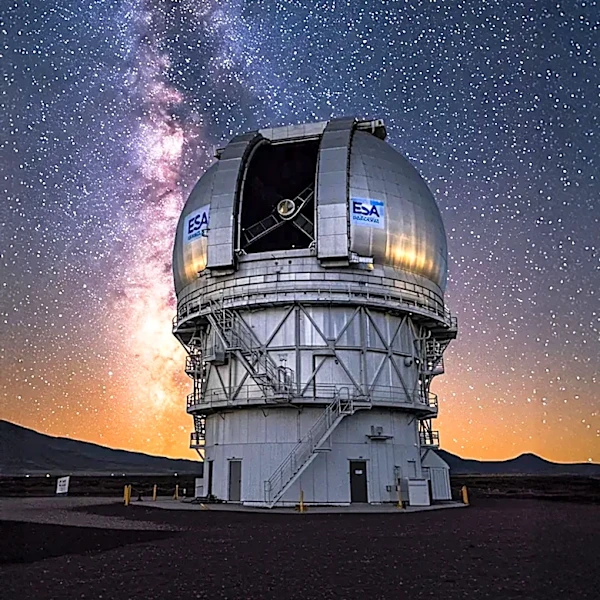
Researchers plan to continue monitoring R631 closely to gather more data on its trajectory and characteristics. While significant new information may not be immediately available, ongoing observations will be crucial for refining theories about its origin and behavior. The object is predicted to make its closest approach to the Sun in 2047, at which point astronomers anticipate it might begin spewing gas, a characteristic of comets. This event could provide valuable insights into its composition and confirm whether it is indeed a massive comet, possibly of interstellar origin. The Vera C. Rubin Observatory, which recently began operations, is expected to play a role in spotting more previously unknown moving objects in space, potentially aiding in the discovery of similar anomalies or providing comparative data for R631.
Beyond the Headlines
The existence of an object like R631 with such an anomalous orbit raises profound questions about the cosmic neighborhood beyond our immediate solar system. If R631 is indeed an interstellar visitor, it would provide direct evidence of material exchange between star systems, offering a unique opportunity to study matter from another stellar environment. Conversely, if it originated within our solar system, its unusual orbit could be a relic of a chaotic early period, hinting at gravitational events far more dynamic than currently understood. This discovery underscores the dynamic and often unpredictable nature of space, pushing the boundaries of our current astrophysical models and encouraging a more open-minded approach to the possibilities of celestial mechanics and the origins of objects within and beyond our solar system.