





What's Happening?
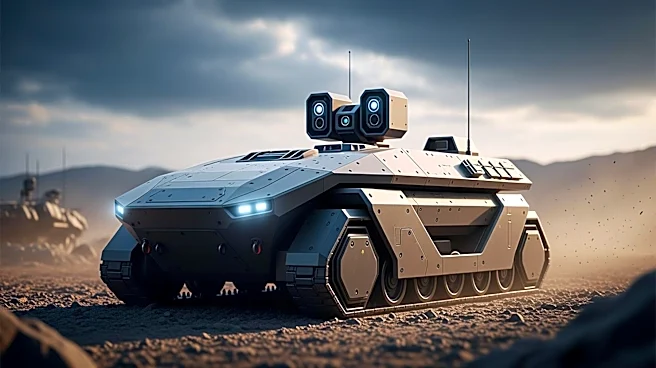
The U.S. Army is actively pursuing the development of autonomous unmanned ground vehicles (UGVs) to enhance logistical support and casualty evacuation on the battlefield. According to a recent government notice, these UGVs are intended to operate in the 'last
tactical mile,' a critical and dangerous zone between support units and forward lines. This area is characterized by high vulnerability to enemy observation and attacks, making it essential for efficient resupply and medical evacuation operations. The Army's initiative aims to expand its fleet of ground drones, which have been in limited use for years, to meet the increasing demands of modern warfare. The UGVs are expected to transport cargo and evacuate at least two casualties without worsening their injuries, while autonomously navigating multiple terrains and integrating with military networks.
Why It's Important?
The development and deployment of autonomous UGVs are crucial for enhancing the operational capabilities of the U.S. military. These vehicles can significantly reduce the risks faced by service members by performing dangerous tasks such as resupply and casualty evacuation in high-threat environments. The use of UGVs aligns with the military's broader strategy to leverage advanced technology for improved mission effectiveness and safety. As demonstrated in the ongoing conflict between Russia and Ukraine, where UGVs have become integral to military logistics, the adoption of such technology can provide a strategic advantage. The U.S. Army's focus on UGVs reflects a commitment to modernizing its forces and maintaining a competitive edge in an era of rapid technological advancements in warfare.
What's Next?
The Army has set a deadline of April 28 for industry responses to its UGV notice, indicating a swift progression towards the acquisition and deployment of these systems. As the Army evaluates proposals, it is likely to consider factors such as payload capacity, terrain adaptability, and integration capabilities. The successful implementation of UGVs could lead to broader adoption across other branches of the military, potentially transforming logistics and casualty evacuation operations. Additionally, the development of UGVs may spur further innovation in autonomous military technology, influencing future defense strategies and procurement decisions.