





What's Happening?
The Colorado Energy Office has been awarded a $250 million federal grant to fund a significant transmission project aimed at enhancing the electricity transfer capacity between the Western and Eastern power grids. This initiative, known as the Colorado-to-Texas
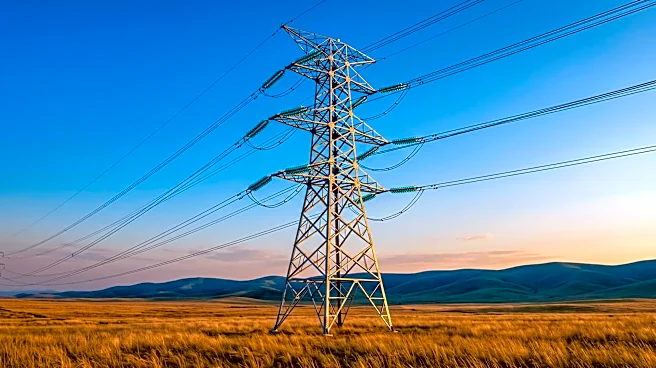
Western-Eastern Intertie Modernization Initiative (CO2TX), will establish a new connection between Colorado and Texas. The project, estimated to cost approximately $1.2 billion, is a collaborative effort with Xcel Energy Services. It involves upgrading the existing Lamar Tie, which will increase its transfer capacity from 210 megawatts to 700 megawatts, with potential for expansion to 2,000 megawatts as demand grows. The Colorado side of the connection will be relocated from Lamar to the higher-capacity May Valley substation, directly linking it to the Colorado Power Pathway transmission network. The upgrades will involve replacing equipment and installing higher-capacity wires on existing power lines, utilizing current transmission corridors to minimize construction costs and land use impacts. The funding for this project was provided by the U.S. Department of Energy through its SPARK program, which supports improvements to existing transmission lines and the adoption of advanced transmission technology, and originates from the Infrastructure Investment and Jobs Act of 2021.
Why It's Important?
This federal grant and the subsequent grid modernization project are crucial for several reasons. Firstly, they address the growing electricity demand in the region, ensuring a more robust and reliable power supply for consumers. The increased transfer capacity will also improve grid resilience during extreme weather events, a critical concern given recent climate-related challenges. Secondly, by connecting the Western and Eastern power grids more effectively, the project will expand access to lower-cost power, potentially leading to economic benefits for residents and businesses. The limited capacity of the nation's regional grids to share electricity has historically constrained their ability to respond to supply shortages and high demand periods, making this upgrade vital for energy security and efficiency. Furthermore, the project's focus on utilizing existing transmission corridors demonstrates an effort to balance infrastructure development with environmental considerations, aiming to reduce land use impacts. The collaboration between the Colorado Energy Office and Xcel Energy, with federal backing, highlights a concerted effort to modernize critical energy infrastructure in the U.S.
What's Next?
The CO2TX project is set to proceed with the Colorado Energy Office as the lead grant recipient. Public Service Company of Colorado and Southwestern Public Service Company, both entities under Xcel Energy, will contribute matching funds and oversee the system planning, design, and implementation phases. Southwest Power Pool will provide essential regional coordination and grid expertise. A key requirement for the construction work is adherence to federal apprenticeship and prevailing wage standards, ensuring fair labor practices. The project's initial phase will focus on upgrading the Lamar Tie to increase its capacity to 700 megawatts, with future plans to expand to 2,000 megawatts as energy demand continues to rise. This phased approach allows for adaptability to future energy needs. The successful execution of this project could serve as a model for other regions looking to enhance their inter-grid connectivity and overall energy infrastructure resilience, potentially leading to further federal investments in similar initiatives across the country.
Beyond the Headlines
Beyond the immediate benefits of increased electricity capacity and grid reliability, this project signifies a broader strategic shift towards a more integrated and resilient national energy infrastructure. The emphasis on connecting the Western and Eastern power grids addresses a long-standing challenge in the U.S. energy system, where regional grids often operate in isolation, limiting their ability to support each other during crises. This initiative could pave the way for a more unified national grid, fostering greater energy independence and security. The use of advanced transmission technology, supported by the SPARK program, also underscores a commitment to innovation in energy infrastructure. Ethically, the project's requirement for federal apprenticeship and prevailing wage standards reflects a dedication to equitable labor practices within large-scale infrastructure developments. Culturally, successful implementation could enhance public confidence in the nation's ability to manage its energy future, especially in the face of climate change and increasing energy demands. This project is not just about wires and substations; it's about building a more interconnected, reliable, and sustainable energy future for the U.S.