
What's Happening?
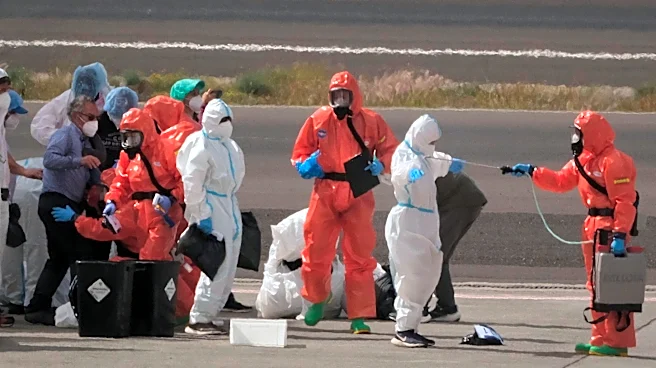
Governor Kathy Hochul announced that three New Yorkers were among 17 American passengers evacuated from a cruise ship affected by hantavirus. The individuals, whose identities remain undisclosed, include
one person from New York City and two others from Orange and Westchester Counties. The passengers were repatriated to the United States for evaluation and quarantine at the National Quarantine Unit at the University of Nebraska Medical Center. Two of the Americans have tested positive for hantavirus, with one showing symptoms. The virus, known for its high mortality rate, requires a 42-day monitoring period. Passengers can choose to complete this period in Nebraska or return home under certain conditions. Governor Hochul emphasized the importance of preparedness, given New York's dense population, while downplaying the likelihood of a pandemic similar to COVID-19.
Why It's Important?
The evacuation and quarantine of these passengers highlight the ongoing global health challenges posed by infectious diseases. Hantavirus, with its significant mortality rate, poses a serious health risk, necessitating stringent monitoring and containment measures. The situation underscores the importance of rapid response and coordination between state and federal health authorities to prevent potential outbreaks. For New York, a state with a high population density, the incident serves as a reminder of the need for vigilance and preparedness in managing public health threats. The state's response could influence public confidence in health safety measures and impact future policy decisions regarding infectious disease management.
What's Next?
The evacuated passengers will undergo a six-week screening process to monitor for hantavirus symptoms. Health officials will continue to evaluate the situation and may adjust protocols based on new developments. Governor Hochul and state health authorities will likely remain engaged in monitoring the health of the affected individuals and coordinating with federal agencies. The incident may prompt a review of health safety protocols for international travel and cruise operations, potentially leading to stricter guidelines to prevent similar occurrences in the future.