





What's Happening?
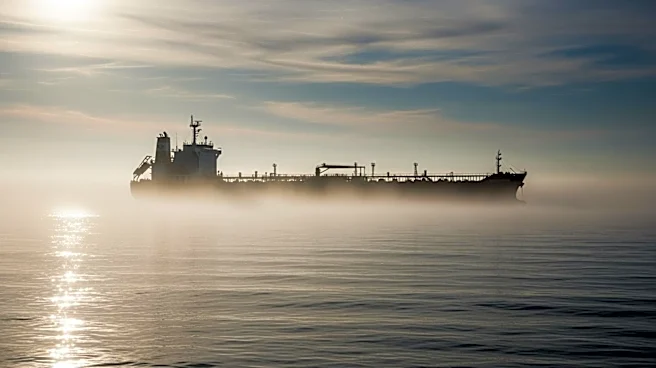
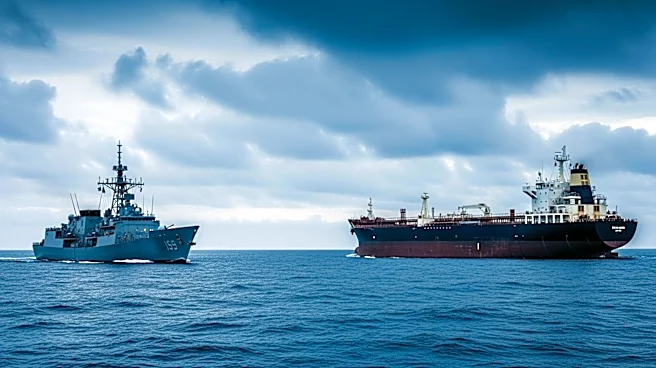
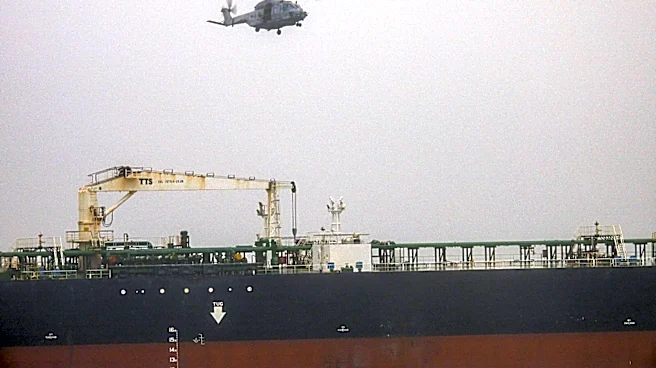
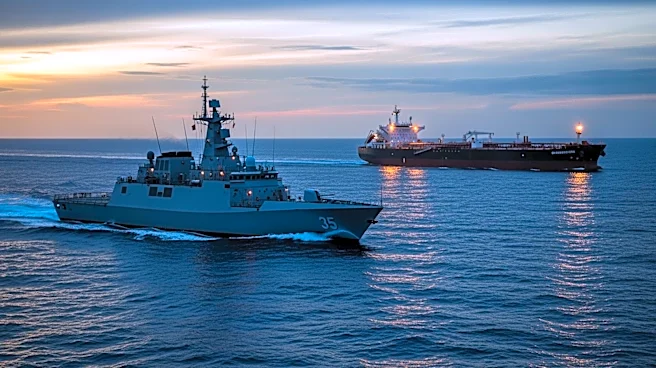
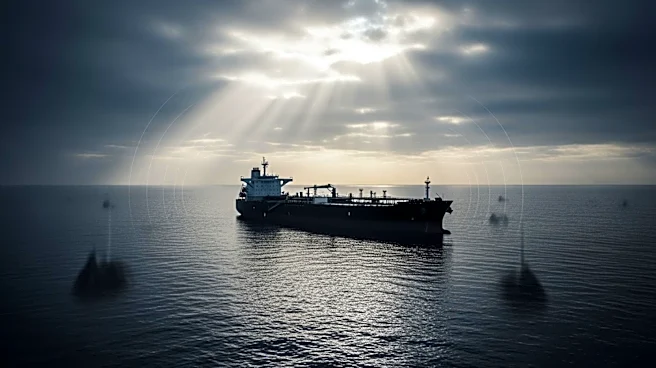
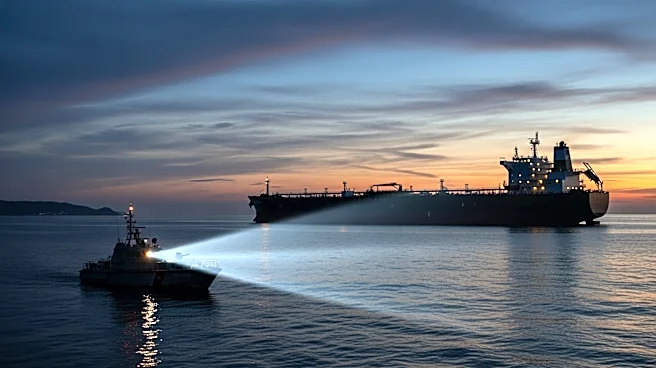
France's navy has intercepted a Russian-linked oil tanker, the Tagor, in the Atlantic Ocean, suspecting it of evading international sanctions. The operation, supported by Britain, involved French commandos boarding the vessel, which was sailing under
a false flag of Madagascar. This action is part of a broader European strategy to curb the 'shadow fleet' of old vessels Russia uses to transport oil and gas, circumventing Western sanctions. The Tagor, originating from Russia's Arctic port of Murmansk, is the fourth such tanker intercepted by France. French President Emmanuel Macron emphasized the importance of preventing ships from violating international sanctions and financing Russia's war efforts in Ukraine. The Kremlin, however, has condemned the interception as illegal and akin to 'international piracy,' with Russian officials arguing that such sanctions are only valid if approved by the UN Security Council.
Why It's Important?
This interception highlights the ongoing geopolitical tensions surrounding Russia's oil trade amidst the Ukraine conflict. The European Union's sanctions aim to limit Russia's ability to fund its military operations, but the effectiveness of these measures is challenged by Russia's adaptation strategies, such as using the 'shadow fleet.' The incident underscores the complexities of enforcing international sanctions and the potential for diplomatic friction, as evidenced by Russia's strong reaction. The interception also reflects the broader European commitment to uphold sanctions, despite the risk of escalating tensions with Russia. This development could influence global oil markets, as disruptions in Russian oil supply may affect prices and availability, impacting economies worldwide.
What's Next?
Following the interception, the Tagor is being escorted to an anchorage off northwestern France for further inspection. The incident may prompt further diplomatic exchanges between European nations and Russia, potentially leading to increased maritime security measures. European countries might intensify their efforts to monitor and intercept vessels suspected of sanctions evasion, while Russia could seek to bolster its maritime defenses. The situation could also lead to discussions within international forums about the legality and enforcement of unilateral sanctions, potentially influencing future international maritime law and policy.
Beyond the Headlines
The interception of the Tagor raises questions about the balance between enforcing international sanctions and respecting maritime sovereignty. The legal and ethical implications of such actions could set precedents for future international relations and maritime law. Additionally, the incident highlights the challenges of global governance in addressing complex geopolitical issues, such as the Ukraine conflict, where economic interests and international law intersect. The situation may also influence public opinion and policy decisions regarding energy security and the reliance on fossil fuels, as countries navigate the geopolitical landscape of energy supply and demand.