
What's Happening?
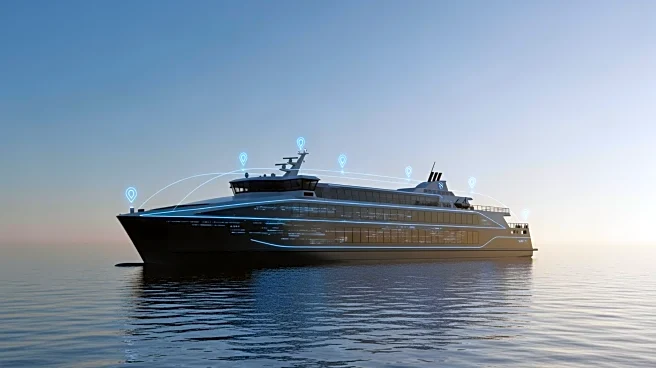
Japan is set to launch its first autonomous navigation ferry, the Olympia Dream Seto, which has completed the licensing process and will begin operations on December 11. This development is part of the MEGURI
2040 project, initiated in 2020 to advance autonomous navigation technology. The ferry, built in 2019, will operate a 70-minute route between Shin-Okayama Port and Shodoshima's Tonosho Port, crossing the Seto Inland Sea. The Nippon Foundation hosted a demonstration of the ferry's autonomous system, showcasing its ability to navigate and reroute when detecting other vessels. The project aims to achieve 50% unmanned operations of domestic ships by 2040, addressing both human error and a shortage of seafarers. The ferry's systems underwent rigorous inspection, earning it the 'early-stage autonomous ship' designation.
Why It's Important?
The introduction of autonomous navigation technology in Japan's maritime industry represents a significant step towards reducing human error and addressing the shortage of seafarers. By automating ferry operations, Japan aims to enhance safety and efficiency in its maritime transport sector. This initiative could set a precedent for other countries to follow, potentially transforming global shipping practices. The success of the MEGURI 2040 project could lead to broader adoption of autonomous technology, impacting the shipping industry's labor dynamics and operational costs. Additionally, it highlights Japan's commitment to technological innovation and its potential to lead in the development of autonomous maritime solutions.
What's Next?
Following the launch of the Olympia Dream Seto, the MEGURI project will continue with additional vessels, including the containership Mikage and the RoRo ship Hokuren Maru No. 2, which are being prepared for certification and demonstration voyages. These efforts are part of a broader strategy to expand autonomous operations across Japan's maritime industry. The project's progress will be closely monitored by industry stakeholders, and its outcomes could influence future regulatory frameworks and safety standards for autonomous shipping. As the technology matures, it may prompt international collaborations and investments in similar projects worldwide.