







What's Happening?
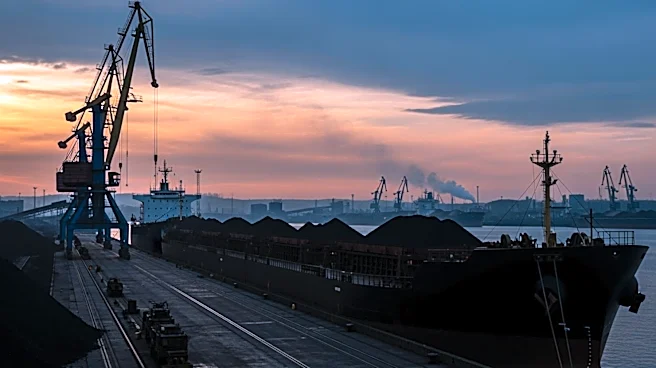
The disruption of LNG shipments due to the closure of the Strait of Hormuz has led to a significant increase in coal shipments to Japan, South Korea, and the European Union. According to the shipping association BIMCO, coal shipments to these regions
rose by 27% year-on-year in April 2026. This surge is attributed to the need for alternative energy sources as gas supplies remain tight. The closure of the Strait of Hormuz has resulted in an 8% decline in global seaborne LNG shipments, prompting these countries to turn to coal to meet their electricity demands. Despite typically lower demand for coal imports in April and May, shipments increased by 1% month-on-month this year. Japan, South Korea, and the EU account for about 25% of global coal cargo volumes and 31% of tonne-mile demand for coal shipping.
Why It's Important?
The increase in coal shipments highlights the ongoing challenges in global energy supply chains, particularly in the context of geopolitical tensions affecting key transit routes like the Strait of Hormuz. This shift towards coal, a more carbon-intensive energy source, underscores the vulnerability of countries heavily reliant on LNG imports. The situation also emphasizes the need for diversified energy sources and the potential acceleration of renewable energy adoption. The rise in coal demand is supporting freight rates, especially for panamax and capesize vessels, indicating economic impacts on the shipping industry. However, the long-term trend is expected to favor renewables, as countries continue to expand their electricity generation capacity from cleaner sources.
What's Next?
BIMCO forecasts that global coal shipments could grow by up to 1% in 2026 and between 0.5% and 1.5% in 2027. However, in the long term, coal shipments to Japan, South Korea, and the EU are expected to decrease as renewable energy capacity continues to grow. The recent spike in energy prices could further accelerate the transition to renewables, reducing reliance on fossil fuels. Continued disruptions at the Strait of Hormuz may further influence energy supply strategies and prompt more investments in alternative energy infrastructure.