






What's Happening?
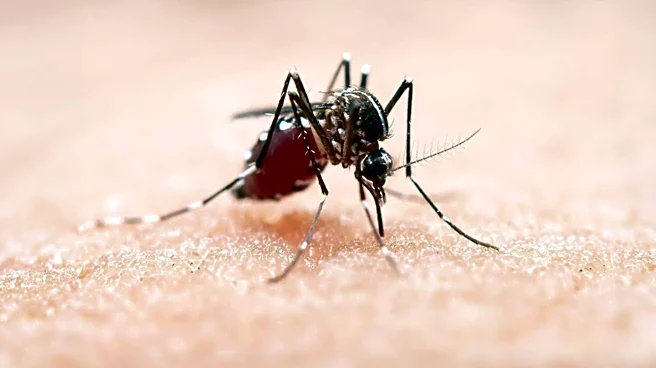
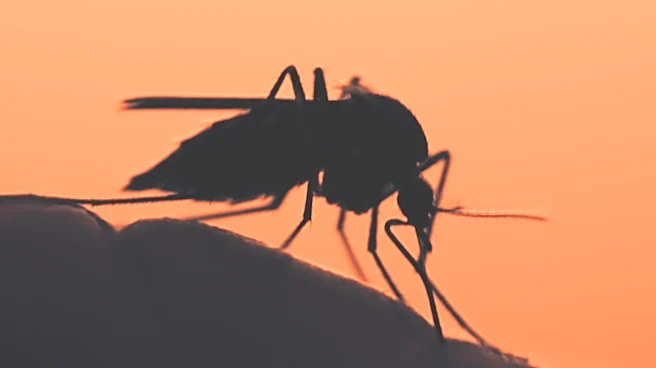
Scientists at the Johns Hopkins University School of Medicine in Baltimore have conducted an in-depth study into the biting process of the Anopheles coluzzii mosquito, a species prevalent in sub-Saharan Africa and a primary carrier of malaria. Published
in the journal Science Advances, their research utilized a combination of computer vision and advanced waveform analysis to meticulously record the mosquito's behavior both above and below the skin. The study involved a single human volunteer, Joanna Konopka, who endured over 1,000 mosquito bites to ensure consistent data collection. The researchers identified five distinct stages of the biting process: piercing, vessel searching, blood ingestion, retraction, and withdrawal. They also discovered that a specific gene, IR76b, is crucial for the mosquito's ability to initiate and complete a bite, particularly during the blood vessel searching phase. This gene is involved in the mosquito's close-range taste and smell perception.
Why It's Important?
This detailed understanding of the mosquito biting mechanism holds significant importance for public health efforts in the U.S. and globally. Malaria, transmitted by Anopheles mosquitoes, causes hundreds of thousands of deaths annually worldwide. By pinpointing the precise steps a mosquito takes to bite, scientists can develop more targeted and effective strategies to prevent bites and, consequently, disease transmission. Current prevention methods, such as chemical barriers and protective clothing, are effective but require a multi-pronged approach. The identification of the IR76b gene as a critical factor in the biting process offers a potential new target for interventions. Disrupting this gene could lead to novel repellents or genetic modifications that make mosquitoes less capable of biting humans, thereby reducing the spread of malaria and other mosquito-borne diseases that pose a threat to U.S. travelers and, in some cases, domestic populations.
What's Next?
The findings from this study are expected to pave the way for the development of new mosquito bite prevention strategies. Future research will likely focus on how to effectively target the IR76b gene or other identified vulnerabilities in the mosquito's biting process. This could involve developing new types of insect repellents that specifically interfere with the mosquito's chemosensory cues, or exploring genetic engineering techniques to alter mosquito populations. The Centers for Disease Control and Prevention (CDC) already advises on strategies like chemical barriers and habitat control, and this new research could lead to an expansion of these methods. Collaboration between academic institutions, public health organizations, and industry partners will be crucial to translate these scientific discoveries into practical tools for mosquito control and disease prevention.
Beyond the Headlines
Beyond the immediate implications for disease prevention, this research highlights the intricate biological mechanisms that govern insect-host interactions. The methodology employed, combining high-speed imaging with electrical signal recording, represents a significant advancement in entomological studies, offering a template for understanding other vector-borne diseases. The ethical considerations of human participation in such studies, as exemplified by the volunteer's extensive exposure to mosquito bites, also underscore the dedication required in scientific research. Furthermore, the study contributes to a broader understanding of insect sensory biology, which could have applications beyond disease control, such as in agricultural pest management. The long-term impact could be a paradigm shift in how mosquito control is approached, moving from broad-spectrum interventions to highly specific, mechanism-based strategies.