






What's Happening?
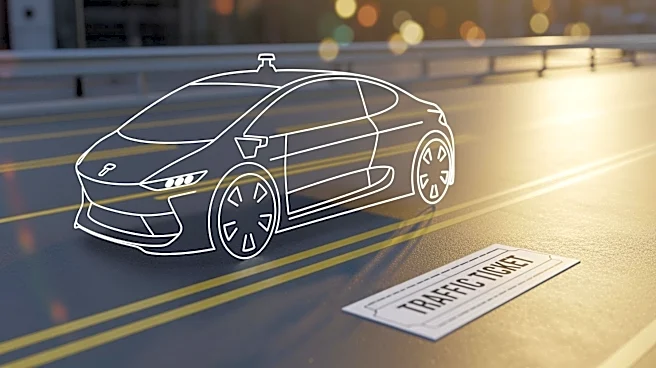
The California Department of Motor Vehicles (DMV) has introduced new regulations that permit law enforcement officers to issue traffic tickets to driverless vehicles. This development marks a significant step in the integration of autonomous vehicles into
the state's traffic enforcement framework. The new rules aim to address the growing presence of driverless cars on California roads and ensure they adhere to the same traffic laws as human-driven vehicles. The DMV's decision reflects an effort to maintain road safety and accountability as the use of autonomous technology expands.
Why It's Important?
The implementation of these rules is crucial as it sets a precedent for how autonomous vehicles are regulated and held accountable in traffic situations. As driverless cars become more prevalent, ensuring they comply with traffic laws is essential for public safety and the smooth operation of road systems. This move could influence other states to adopt similar measures, potentially leading to a standardized approach to autonomous vehicle regulation across the U.S. It also highlights the need for continuous updates to legal frameworks to keep pace with technological advancements in the automotive industry.
What's Next?
With the new rules in place, it is expected that law enforcement agencies will begin training officers on how to effectively issue tickets to driverless vehicles. Additionally, the DMV may monitor the impact of these regulations and make adjustments as necessary. The response from autonomous vehicle manufacturers and technology companies will be critical, as they may need to update their systems to ensure compliance with traffic laws. This development could also prompt discussions on further regulatory measures needed to address other aspects of autonomous vehicle operation.