


What's Happening?
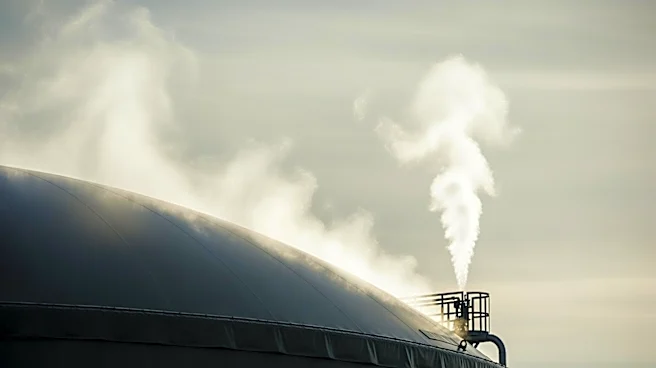
A recent study highlights the challenges faced by U.S. wastewater treatment facilities in achieving net climate benefits from biogas recovery due to methane leakage. The study focuses on anaerobic digestion (AD) systems used in wastewater resource recovery facilities (WRRFs),
which are designed to stabilize sludge and recover biogas. However, the effectiveness of these systems in reducing greenhouse gas emissions is compromised by methane leakage. The research identifies that methane leakage rates often exceed the thresholds necessary for achieving net-zero emissions, particularly in combined heat and power (CHP) and renewable natural gas (RNG) systems. The study emphasizes the need for better leak detection and mitigation strategies to ensure that biogas recovery contributes positively to climate goals.
Why It's Important?
The findings of this study are significant for the U.S. environmental and energy sectors. Methane is a potent greenhouse gas, and its leakage undermines the climate benefits of biogas recovery projects. The study suggests that without effective control measures, the potential climate benefits of biogas recovery could be negated, impacting the U.S.'s ability to meet its carbon neutrality goals. This has implications for policy makers and industry stakeholders who are investing in renewable energy projects as part of broader efforts to combat climate change. The study also highlights the economic implications, as methane leakage affects the financial viability of biogas projects, potentially leading to higher operational costs and longer payback periods.
What's Next?
To address these challenges, the study suggests the implementation of stricter regulations and improved methane leakage detection and mitigation strategies. This could involve adopting technologies and practices from other regions, such as Denmark, which has set national goals for reducing methane loss. Additionally, the study calls for tailored biogas deployment strategies that consider regional grid characteristics and decarbonization trajectories. These steps are crucial for ensuring that biogas recovery projects contribute effectively to emissions reduction targets and remain economically viable.
Beyond the Headlines
The study also points to the need for a deeper investigation into the specific sources of methane leakage within WRRFs. It suggests that smaller facilities may experience higher leakage rates, and that centralized biogas processing could offer environmental advantages. Furthermore, the study highlights the importance of sector-specific analysis, as WRRFs present unique emission profiles that differ from other biogas facilities. Addressing these issues could lead to more accurate assessments of the environmental and economic impacts of biogas recovery projects.