





What's Happening?
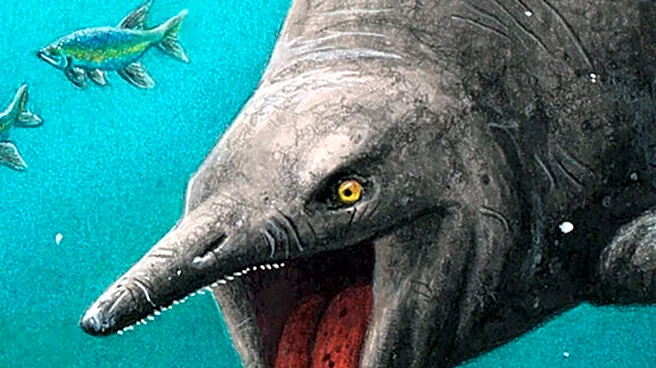
A fossil that remained trapped inside a rock at a Japanese museum for nearly 30 years has been identified as potentially belonging to an undiscovered species of mosasaur, a large marine reptile from the age of dinosaurs. Researchers from various Japanese institutions
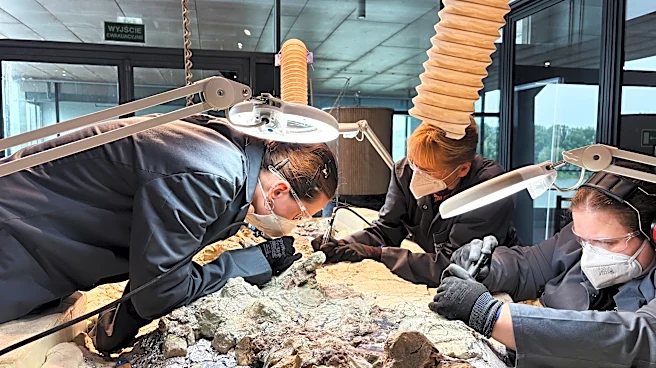
reexamined rock samples collected in the early 1990s and discovered four previously unrecognized fossil bones. Among these, the premaxilla, a bone from the upper jaw, was identified, marking the first such finding in a Japanese mosasaur fossil. The discovery was made possible due to advancements in fossil preparation techniques and a deeper scientific understanding of mosasaurs. The fossils, initially excavated decades ago, were not correctly identified due to a lack of comparative specimens and anatomical details at the time.
Why It's Important?
This discovery is significant as it could lead to the identification of a new species of mosasaur, enhancing our understanding of prehistoric marine biodiversity. Mosasaurs were apex predators in the oceans millions of years ago, and this finding could provide new insights into their evolutionary history. The research underscores the importance of museum collections, which often hold overlooked specimens that can yield new scientific information as technology and knowledge advance. This case highlights how historical collections can contribute to modern scientific discoveries, potentially reshaping our understanding of ancient ecosystems.
What's Next?
Researchers plan to continue studying the newly found fossils to confirm whether they belong to a previously unknown species. If confirmed, this would add a new chapter to the evolutionary history of mosasaurs. The study may also prompt further examination of other museum collections worldwide, potentially leading to more discoveries. The findings could inspire additional research into the anatomical features and ecological roles of mosasaurs, contributing to a broader understanding of marine life during the Cretaceous period.