







What's Happening?
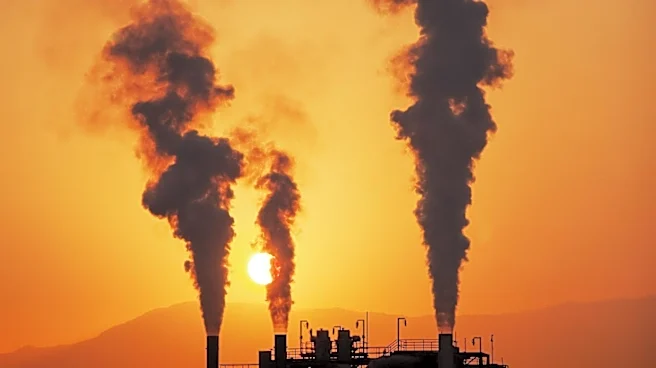
Recent research highlights a significant rise in U.S. energy emissions in 2025, attributed to increased fossil fuel production and consumption. Under President Trump's second term, the U.S. withdrew from the Paris Agreement and reduced renewable energy subsidies,
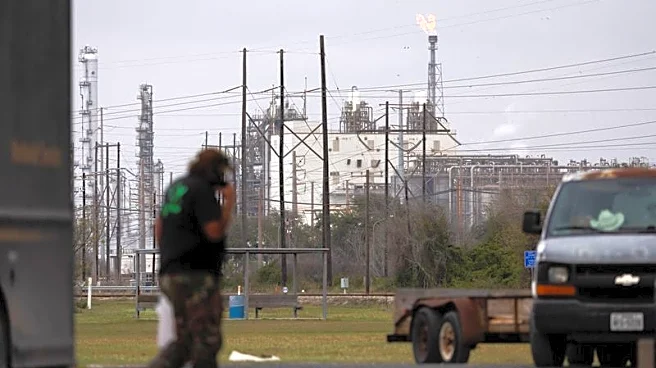
leading to a 152.3 million tonne increase in carbon dioxide emissions. This rise is four times greater than China's increase in the same period. The Trump administration's policies, including the One Big Beautiful Bill Act, have added nearly $40 billion in new federal subsidies for oil, gas, and coal, committing an additional $4 billion annually for the next decade. This shift has resulted in a noticeable growth in fossil fuel production, with liquefied natural gas exports rising by 27% and coal consumption by 10%.
Why It's Important?
The increase in U.S. energy emissions has significant implications for global climate efforts and the country's energy policy. The rollback of renewable energy initiatives and increased support for fossil fuels could hinder progress towards reducing carbon emissions and combating climate change. The U.S., being a major contributor to global emissions, plays a crucial role in international climate agreements. The shift in policy under President Trump may affect the country's ability to meet future climate targets and could influence other nations' energy policies. Additionally, the focus on fossil fuels may impact the renewable energy sector, potentially stalling innovation and investment in sustainable technologies.
What's Next?
The continuation of current policies could lead to further increases in U.S. energy emissions, potentially affecting international relations and climate agreements. Environmental groups and renewable energy advocates may increase pressure on the government to reinstate support for clean energy initiatives. The upcoming elections could also play a pivotal role in determining the future direction of U.S. energy policy. If there is a change in administration, there may be a renewed focus on reducing emissions and supporting renewable energy projects. The global community will likely monitor these developments closely, as U.S. policies have far-reaching impacts on international climate efforts.
Beyond the Headlines
The current U.S. energy policy under President Trump raises ethical and environmental concerns. The increased reliance on fossil fuels contradicts global efforts to transition to cleaner energy sources. This policy direction may also have long-term economic implications, as other countries invest in renewable technologies and reduce their carbon footprints. The U.S. risks falling behind in the global energy transition, potentially losing out on economic opportunities in the growing renewable energy market. Additionally, the environmental impact of increased fossil fuel production could lead to further degradation of natural resources and ecosystems.