



What's Happening?
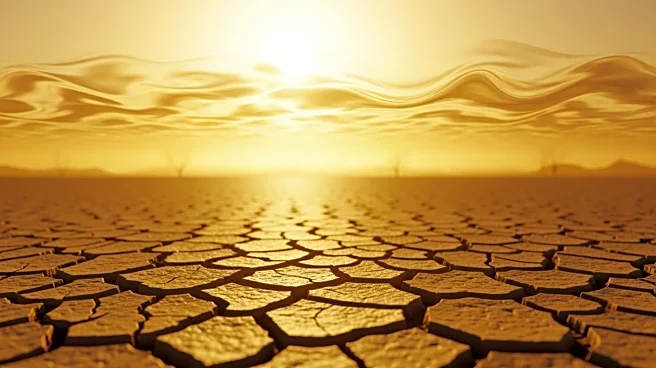
Recent research published in the journal Environmental Research: Health highlights the increasing impact of extreme heat on daily life, particularly for senior citizens and young adults. The study reveals that the number of days where extreme heat makes
ordinary activities too dangerous has doubled globally over the last 75 years. This phenomenon is affecting more than a third of the global population, with significant implications for regions in Asia, Africa, Australia, and North America. The research, led by climate scientist Luke Parsons from the Nature Conservancy, documents how rising temperatures are not only a threat to survival but also restrict simple daily tasks. The study utilized heat and humidity records from 1950 to 2024 and applied the United Nations’ Human Development Index to assess vulnerability. Findings indicate that senior citizens in the U.S. lose 270 hours annually for normal activities due to heat risks, while younger adults globally lose about 50 hours each year.
Why It's Important?
The findings underscore the growing challenge of climate change and its direct impact on human life. As global temperatures continue to rise, the ability of individuals, especially vulnerable populations like the elderly, to perform routine tasks is increasingly compromised. This has broader implications for public health, economic productivity, and social well-being. In wealthier nations, while air conditioning offers some respite, the reliance on outdoor labor by migrant workers in countries like Qatar highlights the socio-economic disparities exacerbated by climate change. The study provides a critical insight into the potential future under continued global warming, emphasizing the need for urgent climate action and adaptation strategies to mitigate these impacts.
What's Next?
The study's findings may prompt policymakers and public health officials to develop strategies to protect vulnerable populations from extreme heat. This could include enhancing urban planning to reduce heat exposure, increasing access to cooling centers, and implementing early warning systems for heatwaves. Additionally, there may be a push for international cooperation to address the root causes of climate change and to support adaptation efforts in less developed regions. The research also calls for further studies to explore the long-term socio-economic impacts of heat on different demographics and to develop comprehensive mitigation strategies.
Beyond the Headlines
The study highlights the ethical and social dimensions of climate change, particularly the disproportionate impact on vulnerable populations. It raises questions about equity and justice, as those with fewer resources are often the most affected by environmental changes. The reliance on migrant labor in extreme heat conditions also points to potential human rights concerns. Long-term, the increasing frequency of heatwaves could lead to shifts in population dynamics, with potential migration from severely affected areas, further stressing urban infrastructures and resources.