

What's Happening?
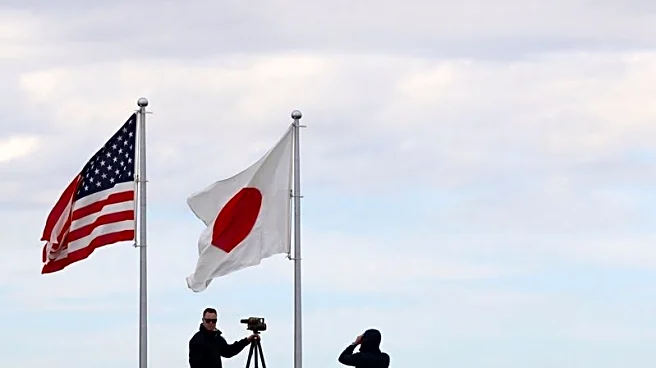
Japan has rejected a U.S. intelligence assessment suggesting that Prime Minister Sanae Takaichi's recent comments on Taiwan represent a significant policy shift. Chief Cabinet Secretary Minoru Kihara stated that Japan's approach remains consistent, denying
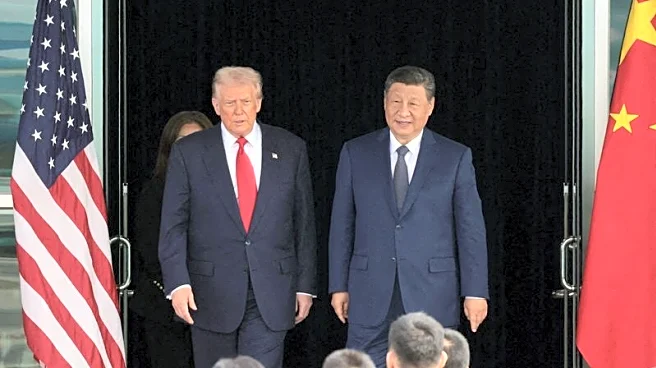
any major change in policy. This response comes as Takaichi visits the U.S. for a summit with President Trump, where the Iranian conflict is expected to be a key topic. Takaichi's remarks in November, which suggested Japan's Self-Defense Forces might intervene if China attempts to seize Taiwan by force, drew criticism from Beijing. In retaliation, China suspended seafood imports from Japan and issued travel advisories, leading to a decline in Chinese tourism to Japan. The U.S. intelligence report, dated March 18, highlighted Takaichi's description of a potential Chinese invasion of Taiwan as a 'survival threatening situation' for Japan, which could justify military intervention under Japan's 2015 constitutional reinterpretation.
Why It's Important?
The situation underscores the delicate balance in East Asian geopolitics, particularly concerning Taiwan's status and regional security. Japan's rejection of the U.S. assessment highlights its cautious approach to foreign policy, especially in matters involving China and Taiwan. The potential for Japan's military involvement in a Taiwan crisis could have significant implications for regional stability and U.S.-Japan relations. China's economic retaliation against Japan following Takaichi's remarks illustrates the economic leverage China holds and its willingness to use it to influence international discourse. The U.S. intelligence community's assessment of China's coercive tactics and the potential for increased pressure through 2026 further complicates the geopolitical landscape, affecting diplomatic and economic strategies in the region.
What's Next?
As Takaichi meets with President Trump, discussions may focus on aligning U.S. and Japanese strategies regarding Taiwan and regional security. The outcome of these talks could influence future diplomatic and military policies. Additionally, Japan may seek to mitigate economic impacts from China's retaliatory measures while maintaining its stance on Taiwan. The international community will likely monitor China's actions closely, as any escalation could affect global markets and diplomatic relations. Japan's response to future Chinese provocations will be critical in shaping its foreign policy and regional alliances.