




What's Happening?
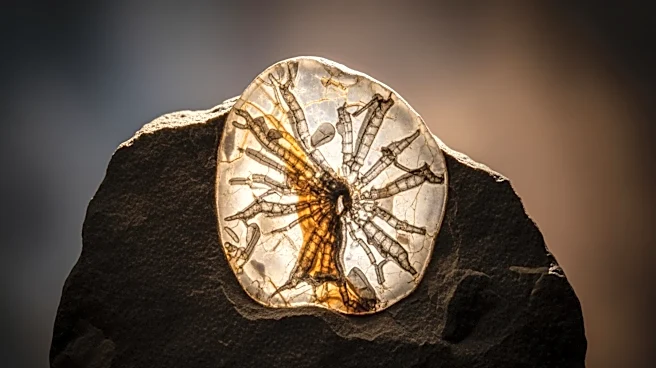
Researchers have re-evaluated ancient microfossils from Brazil, previously thought to be traces of early animal life, and determined they were actually formed by communities of bacteria and algae. This discovery, published in the journal Gondwana Research,
suggests that the oxygen levels in ancient oceans around 540 million years ago may have been too low to support certain forms of animal life. The study focused on fossils from Mato Grosso do Sul, Brazil, which were initially believed to be evidence of wormlike creatures or other tiny marine animals from the Ediacaran period. Using advanced imaging techniques, the researchers found cellular structures consistent with bacteria or algae, rather than animal traces. This finding challenges the timeline of when small animals first appeared on Earth, suggesting that meiofauna, tiny invertebrates, may not have existed during the Ediacaran period as previously thought.
Why It's Important?
This research has significant implications for our understanding of the evolution of life on Earth. By pushing back the timeline for the appearance of small animals, it reshapes the narrative of the Cambrian explosion, a pivotal event in evolutionary history marked by a rapid diversification of life forms. The study highlights the importance of oxygen levels in the development of complex life, suggesting that the conditions necessary for animal life may have developed later than previously believed. This could influence how scientists interpret other fossil records and understand the environmental factors that facilitated the rise of complex organisms. The findings also underscore the role of advanced imaging technologies in paleontology, allowing for more accurate interpretations of ancient life forms.
What's Next?
Future research may focus on further exploring the environmental conditions of the Ediacaran period to better understand the factors that delayed the emergence of animal life. Scientists might also apply similar imaging techniques to other fossil sites to reassess the origins and development of early life forms. This could lead to new insights into the evolutionary processes that preceded the Cambrian explosion. Additionally, the study may prompt a reevaluation of other fossil records, potentially leading to revisions in the timeline of life's evolution on Earth.
Beyond the Headlines
The reinterpretation of these fossils not only challenges existing theories about the origins of animal life but also highlights the complexity of Earth's early ecosystems. The presence of large bacteria and algae communities suggests that microbial life played a significant role in shaping the planet's early environments. This discovery may also have implications for the search for life on other planets, as it emphasizes the need to consider microbial life forms and their environmental interactions when assessing the potential for life beyond Earth.