


What's Happening?
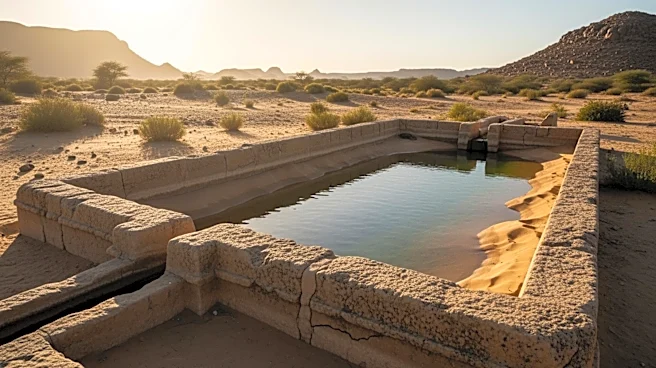
A collection of ancient water reservoirs and service facilities has been discovered at the medieval Port of Aydhab on the west coast of the Red Sea. This site, located near the border between Egypt and Sudan, was historically a significant Egyptian port.
The Egyptian Tourism and Antiquities Ministry announced the findings, which include a main reservoir measuring approximately 15.10 meters long, 3.15 meters wide, and about 3 meters high. The reservoir is constructed from sandstone and local coral, with a limestone sealant to prevent leakage. Archaeological surveys also revealed foundations of residential buildings, watchtowers, and service facilities, indicating an integrated system to manage the port. Pottery fragments from the Fatimid Caliphate and shards of imported Chinese porcelain were also found, underscoring the port's historical role in international trade.
Why It's Important?
The discovery of these ancient reservoirs and facilities highlights the advanced infrastructure of ancient Egyptian ports, which were crucial for trade and pilgrimage. This finding provides insight into the historical significance of the Port of Aydhab as a hub of commerce and cultural exchange. The presence of imported Chinese porcelain suggests extensive trade networks, while the infrastructure indicates a sophisticated system for managing resources and supporting travelers. This discovery not only enriches the understanding of ancient Egyptian engineering and trade but also emphasizes the cultural and historical importance of border regions and remote areas in Egypt.