




What's Happening?
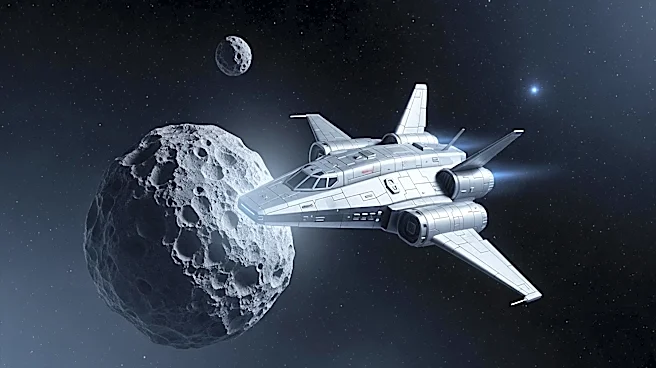
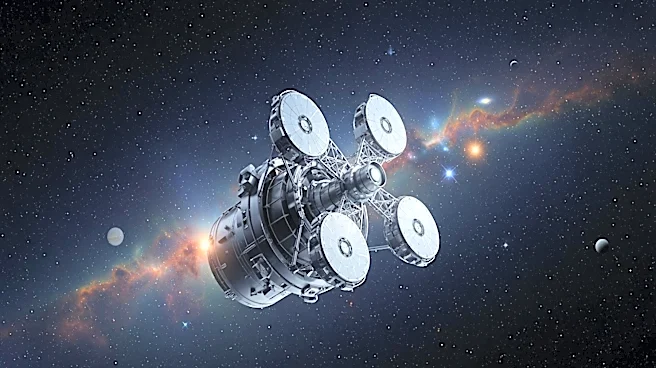
The European Space Agency (ESA) and the Japan Aerospace Exploration Agency (JAXA) have formalized a partnership to launch the Ramses spacecraft, which will study asteroid Apophis during its close approach to Earth in April 2029. The mission aims to observe
how Earth's gravity affects the asteroid's structure and rotation. Apophis will pass within 32,000 kilometers of Earth, providing a unique scientific opportunity. The Ramses mission will map surface changes and analyze the asteroid's internal structure, contributing to planetary defense research.
Why It's Important?
The Ramses mission represents a significant advancement in planetary defense, offering a rare opportunity to study an asteroid's response to Earth's gravitational forces. Understanding these interactions is crucial for developing strategies to mitigate potential asteroid threats. The collaboration between ESA and JAXA also underscores the importance of international cooperation in addressing global challenges. The mission's findings could inform future efforts to deflect or manage asteroids that pose a risk to Earth, enhancing global safety and preparedness.
What's Next?
The Ramses spacecraft is scheduled to launch in 2028, with the mission set to observe Apophis during its 2029 flyby. The data collected will be analyzed to improve models of asteroid behavior and inform planetary defense strategies. The mission's success could lead to further international collaborations and advancements in space exploration and defense. As the launch date approaches, ESA and JAXA will continue to coordinate efforts, ensuring the mission meets its scientific and safety objectives.