



What's Happening?
The Houthis, who control a significant portion of northern Yemen, have become a more effective ally for Iran than Hezbollah, according to Yemen expert Al-Basha. This assessment is based on the Houthis' territorial control, state institutions, and strategic
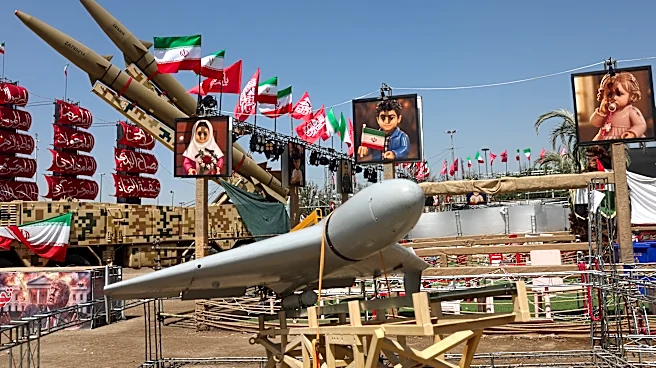
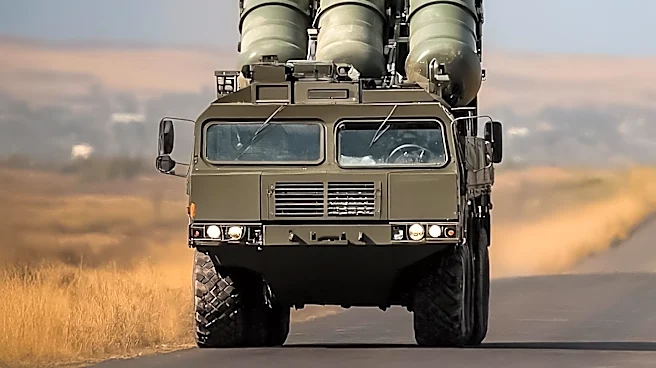
geographical position along the Red Sea and the Bab al-Mandab Strait, a critical maritime chokepoint. The group seized Sanaa in 2014, establishing themselves as a de facto government and inheriting North Yemen's conventional military. Iran has heavily invested in the Houthis' military capabilities, providing anti-ship ballistic missiles, anti-ship cruise missiles, land-attack cruise missiles, and long-range drones. The Islamic Revolutionary Guard Corps and its Quds Force are central to this relationship. While the Houthis have developed some local manufacturing, Iranian support is crucial for their advanced missile and drone arsenal. Unlike Hezbollah, Iran's support for the Houthis has primarily been military rather than financial, though discounted cooking gas and crude have been supplied for resale.
Why It's Important?
The Houthis' enhanced capabilities and strategic location have significant implications for regional and global maritime security. Their control over the Bab al-Mandab Strait allows them to disrupt international shipping, impacting global trade and energy markets. This leverage is particularly potent as Saudi Arabia has been forced to reroute more crude through its east-west pipeline towards the Red Sea due to disruptions in the Strait of Hormuz. The Houthis' ability to exert pressure on Saudi Arabia and the international community, coupled with their own expansionist ambitions in the Horn of Africa and Sudan, suggests a growing threat to stability in a crucial geopolitical region. The comparison to Hezbollah highlights a shift in Iran's regional strategy, focusing on allies with territorial control and direct access to vital maritime routes, which could lead to more direct confrontations and increased militarization of key shipping lanes.
What's Next?
The Houthis are expected to continue leveraging their control over the Bab al-Mandab Strait to achieve their objectives, including financial concessions from Saudi Arabia, such as $100 million a month in salary support and billions in reparations. Their current confrontation with Saudi Arabia is driven by economic pressure within Houthi-controlled areas, as much of their revenue is prioritized for the war effort. While the Houthis have so far avoided directly attacking U.S. assets, their continued disruptive actions against Saudi Arabia could eventually draw the U.S. into the conflict. The increasing visibility of ties between Tehran and Houthi authorities, including the return of an Iranian ambassador and a Quds Force representative to Houthi-controlled territory, indicates a deepening and more overt alliance. This suggests a sustained and potentially escalating challenge to regional stability and international shipping.
Beyond the Headlines
The Houthis' rise as a powerful, territorially controlled entity with significant Iranian backing represents a complex evolution in regional power dynamics. Their ability to act on their own agenda, even while supported by Iran, underscores the nuanced nature of proxy warfare. The group's determination, political agenda, and broader ambitions, beyond merely serving Iranian interests, suggest a long-term player in the region with the potential to reshape geopolitical landscapes. The economic distress within Houthi-controlled areas, evidenced by people fighting over food and an 'I am hungry' campaign, highlights the humanitarian cost of the conflict and the internal pressures driving the Houthis' external actions. This situation also raises ethical questions about the impact of prolonged conflict on civilian populations and the responsibility of external actors in exacerbating or alleviating such crises.